






What's Happening?
Rodrigo Farias, Vice President of Completions, Interventions, and Measurements at Baker Hughes, has highlighted the rapid progress of electrification in the oil and gas sector. This shift is driven by the need for increased efficiency, cost reduction,
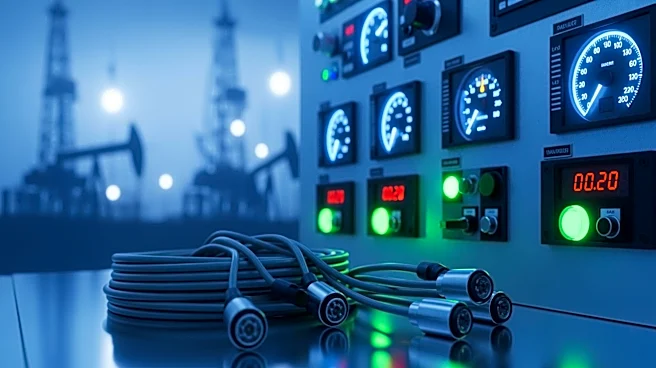
and compliance with environmental mandates. Electrification is particularly advancing in onshore fields due to easier grid access, while offshore operations are integrating shore-power and renewable energy despite infrastructure challenges. Farias emphasized that electrification simplifies systems, enhances reliability, and reduces costs, especially in complex environments like deepwater operations. By replacing hydraulic systems with electric lines, the process becomes more streamlined and reliable, reducing the need for multiple control lines and improving overall system performance.
Why It's Important?
The move towards electrification in the oil and gas industry is significant as it addresses both economic and environmental concerns. By simplifying operations and reducing the reliance on hydraulic systems, companies can lower capital and operational expenditures. This transition also supports decarbonization efforts by minimizing the physical footprint and material usage. For stakeholders, particularly in deepwater environments, electrification offers a more sustainable and economically viable solution, enhancing the longevity and efficiency of oil extraction processes. The ability to better manage reservoirs through precise control and monitoring can lead to improved recovery rates, benefiting both the industry and energy consumers.
What's Next?
As electrification continues to evolve, Baker Hughes is expected to further develop and implement these technologies across various oil and gas operations. The focus will likely remain on enhancing system reliability and performance, particularly in challenging environments like deepwater fields. Future advancements may include integrating artificial intelligence to optimize reservoir management and production processes. Stakeholders in the industry will need to adapt to these changes, potentially leading to shifts in operational strategies and investment priorities. The ongoing development of electrification technologies will play a crucial role in shaping the future of the oil and gas sector.
Beyond the Headlines
Electrification in the oil and gas industry not only addresses immediate operational efficiencies but also aligns with broader environmental goals. By reducing the carbon footprint and simplifying infrastructure, the industry can contribute to global sustainability efforts. This transition may also influence regulatory frameworks, as governments and environmental bodies push for cleaner energy solutions. Additionally, the integration of digital technologies and automation in electrified systems could lead to new business models and opportunities for innovation within the sector.