
What's Happening?
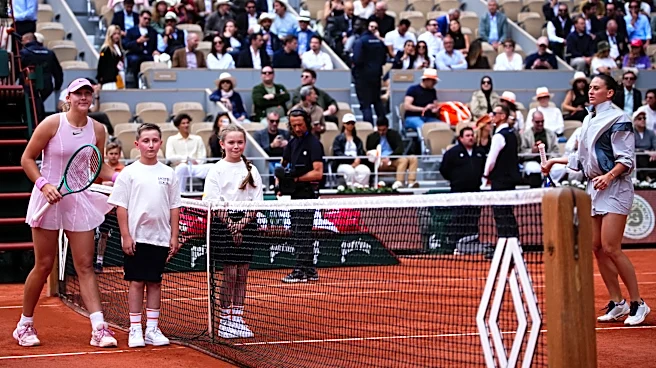
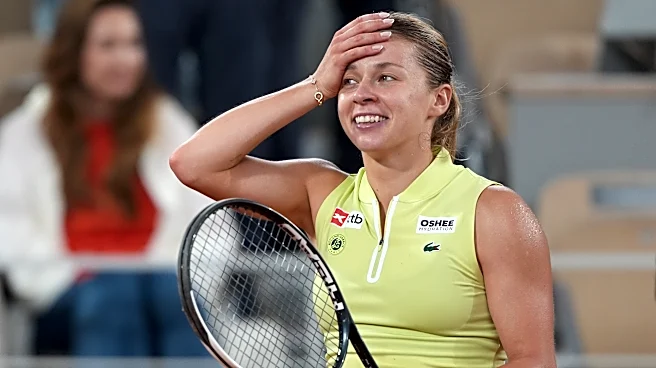
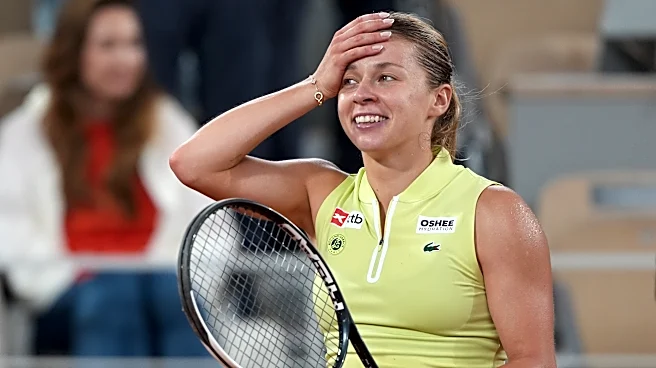
Mirra Andreeva, a 19-year-old Russian tennis player, has won the French Open, marking her first Grand Slam title. She defeated Maja Chwalinska, a 114th-ranked Polish qualifier, with a 6-3, 6-2 victory
in the final. Andreeva's win makes her the youngest player to claim the women's singles title since Monica Seles in 1992. During the match, Andreeva showcased her skill by producing 25 winners compared to Chwalinska's 10, and committed fewer unforced errors. Despite a strong Polish presence in the crowd, Andreeva managed to maintain her focus and secure the victory. Her triumph is a significant milestone in her career, having been considered a Grand Slam contender since her debut at the 2023 Madrid Open.
Why It's Important?
Andreeva's victory at the French Open is significant for several reasons. It highlights her potential to become a dominant force in women's tennis, given her young age and impressive performance. This win could propel her into the spotlight, attracting sponsorships and increasing her influence in the sport. Additionally, her success may inspire other young athletes, particularly from Russia, to pursue tennis at a competitive level. The win also underscores the challenges faced by athletes competing under neutral status due to geopolitical tensions, as Andreeva has had to play without her country's flag due to the ongoing conflict between Russia and Ukraine.
What's Next?
Following her victory, Andreeva is likely to face increased expectations and pressure to perform in future tournaments. Her next steps may include participating in other Grand Slam events, where she will aim to build on her success and establish herself as a consistent contender. The tennis community will be watching her development closely, as she navigates the challenges of maintaining her performance while dealing with external pressures. Additionally, her win may prompt discussions about the impact of geopolitical issues on sports, particularly regarding athletes competing under neutral status.
Beyond the Headlines
Andreeva's victory also brings attention to the broader implications of sports diplomacy and the role of athletes in international relations. Her ability to compete and succeed despite the absence of her national flag highlights the resilience and adaptability required in today's global sports environment. This situation may lead to further dialogue on how sports can serve as a platform for peace and understanding, transcending political conflicts. Moreover, Andreeva's success could influence the perception of Russian athletes on the international stage, potentially fostering a more positive image amidst ongoing geopolitical tensions.