







What's Happening?
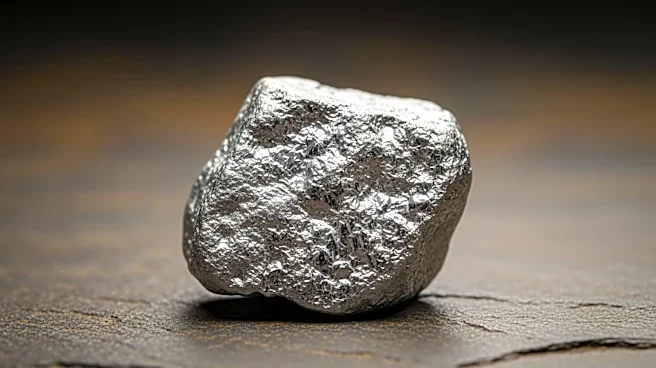
Researchers at King’s College London have developed a new form of aluminum that could potentially replace expensive and hard-to-source metals like platinum and palladium in industrial applications. This new compound, a neutral aluminum(I) trimer known
as cyclotrialumane, exhibits unprecedented reactivity, making it a promising candidate for use as a catalyst in chemical processes. The discovery is part of ongoing efforts to find more sustainable and cost-effective alternatives to critical metals, which are essential for various industries but are often environmentally damaging to extract and difficult to secure.
Why It's Important?
The development of this new form of aluminum is significant as it could lead to more sustainable and affordable industrial processes. Catalysts are crucial in manufacturing chemicals, fuels, and other products, and many rely on rare and expensive metals. By potentially replacing these with aluminum, which is abundant and much cheaper, industries could reduce their environmental impact and production costs. This breakthrough aligns with global efforts to create more resilient supply chains and reduce reliance on critical metals, which are subject to geopolitical tensions and market volatility.
What's Next?
The next steps involve further research to determine if this new aluminum compound can be used in practical catalytic applications. Researchers will need to test its stability and effectiveness in real-world industrial processes. If successful, this could lead to widespread adoption in various sectors, reducing the demand for critical metals and potentially transforming the catalyst market. Additionally, the discovery may prompt further exploration of other common elements for similar applications, contributing to a broader shift towards more sustainable industrial practices.