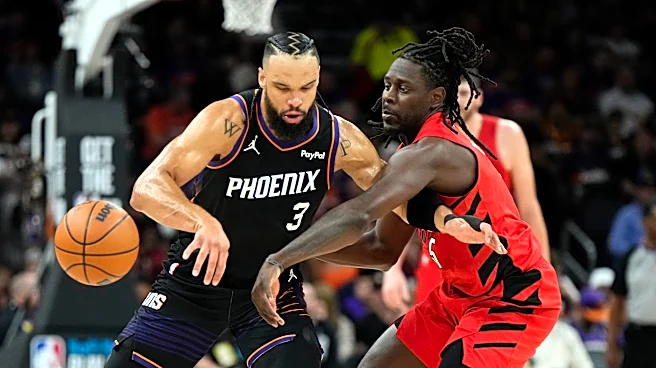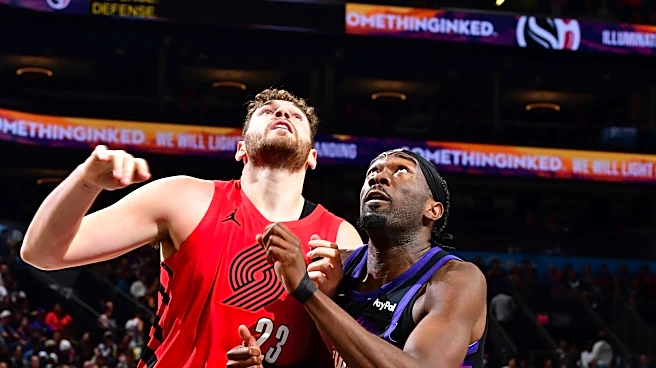






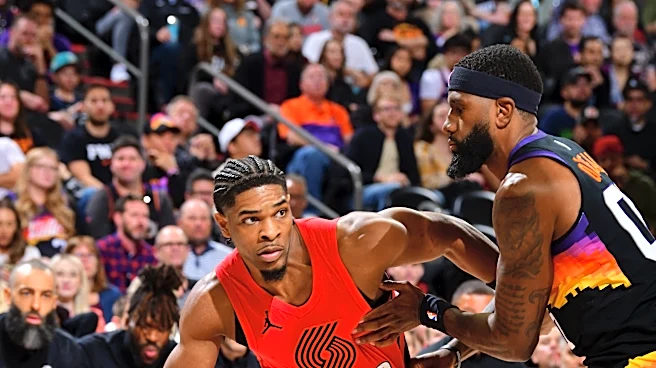
What's Happening?
The Phoenix Suns faced a significant challenge in their recent Play-In game against the Portland Trail Blazers, where they suffered a narrow defeat. The game highlighted a critical structural flaw in the Suns' lineup, particularly their lack of size and depth
at the power forward position. Deni Avdija of the Trail Blazers capitalized on this weakness, scoring 41 points, just shy of his career high. The Suns' defensive efforts, led by Jordan Goodwin and Dillon Brooks, were insufficient to contain Avdija, who exploited the size mismatch. The Suns' roster, heavily reliant on wing players, lacks a reliable power forward, a deficiency that has been apparent since the start of the season. This imbalance was evident as the Suns struggled to match the balanced lineup of the Trail Blazers, which included a mix of guards, forwards, and bigs.
Why It's Important?
The Suns' inability to address their power forward deficiency has significant implications for their competitiveness in the NBA. The team's reliance on a wing-heavy roster is a strategic misstep in an era dominated by versatile bigs and forwards. This structural flaw limits the Suns' ability to compete effectively against teams with more balanced lineups, potentially hindering their postseason success. The lack of a reliable power forward not only affects the team's defensive capabilities but also their overall roster balance, which is crucial for sustained success in the league. Addressing this issue is vital for the Suns to enhance their competitiveness and improve their chances in future playoff runs.
What's Next?
The Suns need to reassess their roster strategy and consider acquiring a reliable power forward to address their size disadvantage. Potential moves could include trading for a fringe starting caliber power forward or developing existing players like Rasheer Fleming or Ryan Dunn to fill this role. The team's management may also explore the possibility of acquiring a player like PJ Washington, who could provide the necessary balance and depth. Without addressing this critical flaw, the Suns risk continued struggles against teams with more balanced and versatile lineups.