
What's Happening?
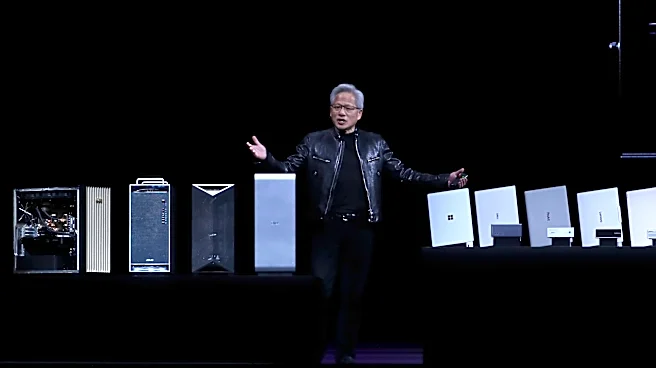
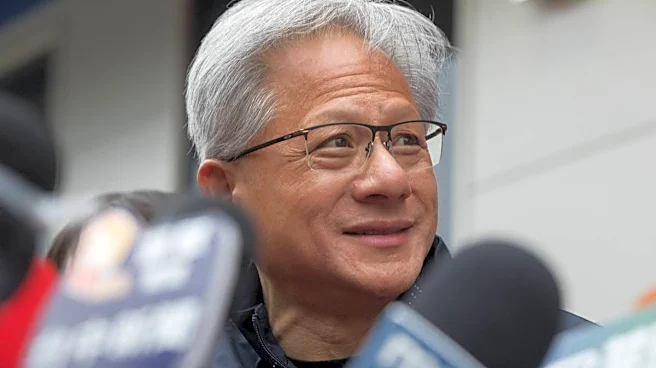
Nvidia CEO Jensen Huang has articulated a vision for the future of personal computing that heavily involves artificial intelligence (AI). Speaking at Computex 2026, Huang emphasized the potential of AI to autonomously manage tasks on personal computers,
suggesting a shift towards AI agents that interact with users continuously. This vision aligns with Nvidia's recent unveiling of its RTX Spark chip, marking the company's entry into the gaming laptop market. Despite the ongoing memory crisis, Huang believes Nvidia can significantly contribute to the reinvention of personal computers, leveraging AI to transform how these devices operate. He envisions a future where personal computers are not just reactive tools but proactive agents that engage with users in a conversational manner, akin to having a personal assistant.
Why It's Important?
Huang's vision for AI-driven personal computing could have profound implications for the technology industry and consumer behavior. By integrating AI more deeply into personal computing, Nvidia aims to redefine user interaction with technology, potentially increasing efficiency and personalization. This shift could also influence the competitive landscape, as companies may need to innovate to keep pace with AI advancements. However, the adoption of AI in personal computing raises concerns about privacy and data security, as users may be wary of entrusting sensitive information to AI systems. Additionally, the environmental impact of increased AI usage and the potential for reduced problem-solving skills among users are critical considerations.
What's Next?
As Nvidia continues to develop its AI-driven computing solutions, the company may face both opportunities and challenges. The success of this initiative will likely depend on consumer acceptance and the ability to address privacy and security concerns. Nvidia's collaboration with partners like Microsoft and MediaTek suggests a strategic approach to overcoming technical and market barriers. The broader tech industry will be watching closely to see how AI integration in personal computing evolves and whether it leads to widespread adoption. Regulatory scrutiny and public discourse on AI ethics and data protection will also play a significant role in shaping the future of AI in personal computing.
Beyond the Headlines
The move towards AI-driven personal computing could signal a cultural shift in how society interacts with technology. As AI agents become more prevalent, there may be a reevaluation of the role of human agency in decision-making processes. This development could also spur discussions on the ethical implications of AI autonomy and the balance between convenience and control. Long-term, the integration of AI in personal computing could influence educational approaches, as skills related to AI interaction and management become increasingly important.