


What's Happening?
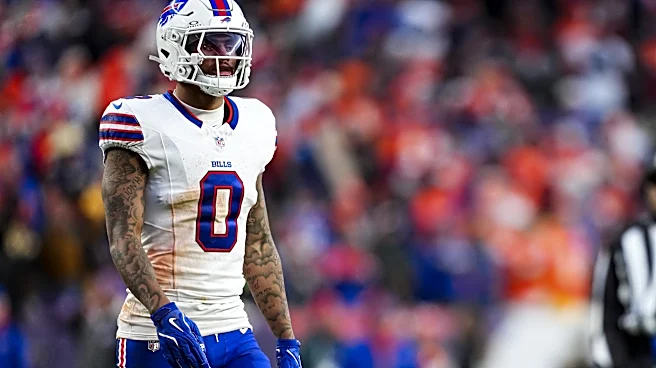
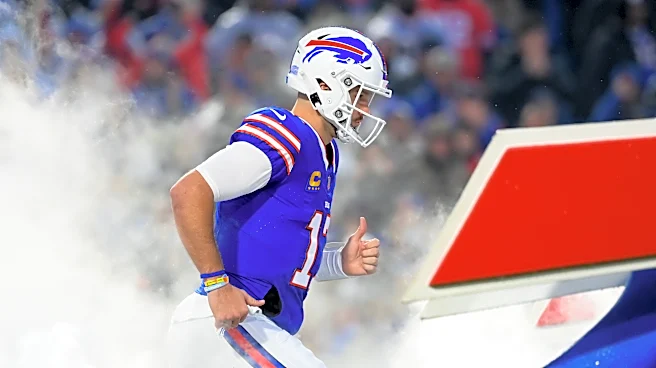
The Buffalo Bills are undergoing a significant defensive transformation under new coordinator Jim Leonhard, shifting from a 4-3 to a 3-4 alignment. This change necessitates adjustments in player positions, notably moving Gregory Rousseau from defensive end
to outside linebacker. The team faces challenges in filling key roles, such as the absence of a true nose tackle, with DeWayne Carter and Deone Walker as potential candidates. Additionally, second-round pick T.J. Parker is expected to enhance the edge rush, although his fit at 263 pounds is considered unconventional. These changes are part of the Bills' strategy to strengthen their defensive capabilities.
Why It's Important?
The Bills' decision to switch defensive schemes and reposition players like Rousseau is crucial for maintaining competitiveness in the NFL. This strategic shift aims to optimize the team's defensive strengths and address existing gaps. The success of this transition could significantly impact the Bills' performance in the upcoming season, influencing their ability to contend for playoff positions. The move also highlights the importance of adaptability in professional sports, as teams must continuously evolve to meet new challenges and leverage player talents effectively.
What's Next?
As the Bills implement their new defensive strategy, the focus will be on how well players adapt to their new roles and the overall effectiveness of the 3-4 alignment. The team's performance during training camps and preseason games will provide insights into the success of these changes. Stakeholders, including fans and analysts, will closely monitor the impact on the Bills' defensive statistics and game outcomes. The team's management may also consider further roster adjustments based on early evaluations of the new system's performance.