



What's Happening?
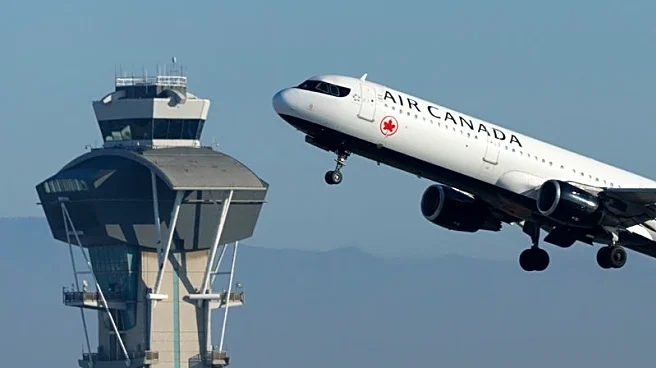
Michael Rousseau, CEO of Air Canada, has announced his retirement following criticism over his failure to issue condolences in both English and French after a fatal accident involving two pilots. The incident occurred at New York's LaGuardia Airport,
where a collision resulted in the deaths of two pilots, one of whom was a French-speaking Quebecer. Rousseau's English-only condolence message, with French subtitles, sparked backlash in Canada, a bilingual country with a significant French-speaking population. The controversy highlights ongoing language sensitivities in Canada, particularly in Quebec, where French is the predominant language.
Why It's Important?
The retirement of Air Canada's CEO underscores the importance of cultural and linguistic sensitivity in corporate communications, especially in a bilingual nation like Canada. The incident has drawn attention to the challenges faced by companies operating in diverse linguistic environments and the potential reputational risks associated with failing to address these challenges adequately. The controversy also reflects broader societal debates about language rights and cultural identity in Canada, which can influence public perception and consumer behavior.
What's Next?
Air Canada's board will need to appoint a new CEO who can navigate the linguistic and cultural complexities of the Canadian market. The company may also need to review its communication strategies to ensure they align with the expectations of its diverse customer base. The incident could prompt other Canadian companies to reassess their own language policies and practices to avoid similar controversies. Additionally, the Canadian government and language advocacy groups may continue to push for greater recognition and support for bilingualism in corporate and public communications.