
What's Happening?
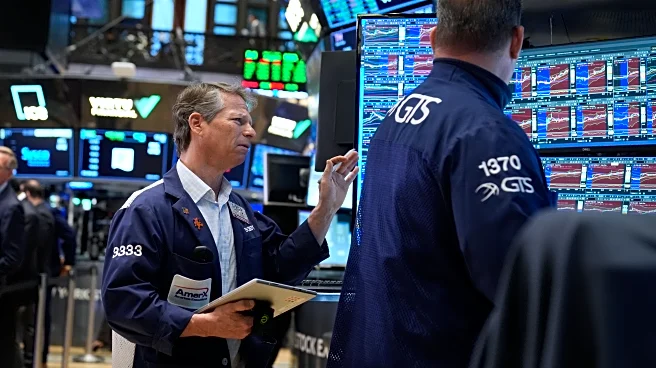
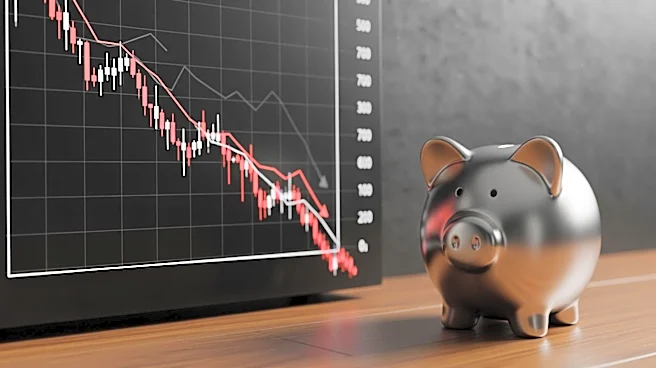
The Thrift Savings Plan (TSP), a 401(k)-style retirement savings program for federal employees, experienced significant losses across most of its portfolios in March 2026. This downturn is attributed to global economic disruptions following President
Trump's military actions in Iran. The G Fund, composed of government securities, was the only portfolio to see gains, increasing by 0.34% in March and 1.04% for the year. In contrast, the C Fund, which includes common stocks, fell by 4.98%, and the S Fund, focused on small- and mid-size businesses, decreased by 4.58%. The I Fund, which invests internationally, was the hardest hit, losing 9.35% in March. The fixed income F Fund also saw a decline of 1.77%. Lifecycle (L) funds, which adjust investments as participants near retirement, also suffered losses, with the L 2050 Fund dropping by 5.37% and the L 2075 Fund by 6.40%.
Why It's Important?
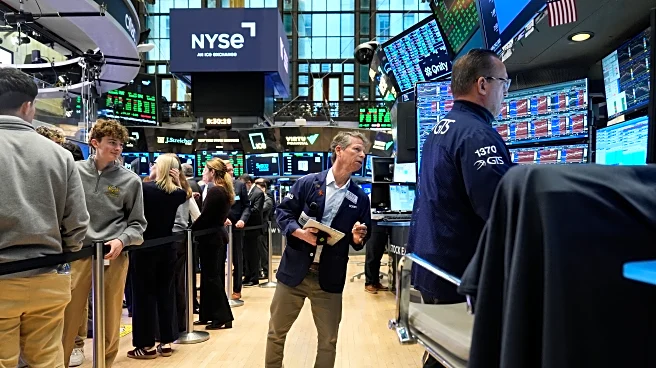
The performance of the TSP funds is a critical indicator of the broader economic impact of geopolitical tensions, particularly those involving the U.S. The losses in these funds reflect the volatility and uncertainty in global markets, which can affect the retirement savings of federal employees. The downturn in these funds could lead to increased financial insecurity for retirees and those nearing retirement, potentially influencing their financial planning and spending behavior. Additionally, the performance of these funds may impact the overall confidence in government-managed retirement savings programs, prompting discussions on the need for more diversified investment strategies to mitigate risks associated with geopolitical events.
What's Next?
As the geopolitical situation evolves, the TSP and its participants will likely monitor global economic conditions closely. The Federal Reserve's stance on interest rates, influenced by rising mortgage rates and economic uncertainties, will also play a crucial role in shaping future fund performances. Participants may need to reassess their investment strategies, considering the potential for continued volatility. Additionally, policymakers might explore measures to enhance the resilience of retirement savings programs against geopolitical and economic shocks.