








What's Happening?
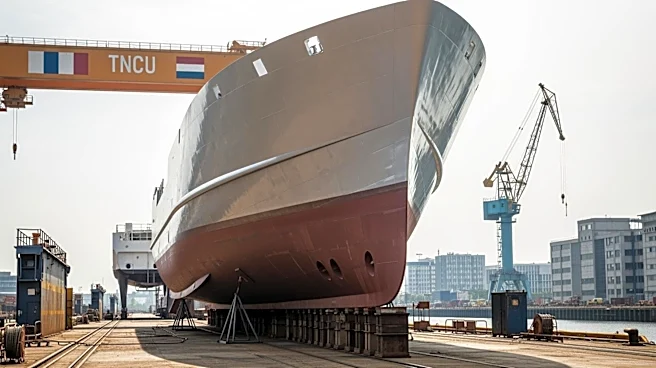
C&C Marine & Repair LLC has completed the construction of the M/V Deborah H. Valentine, a 2,600 horsepower inland towboat, for Canal Barge Company. This vessel is the second in a four-boat construction program at C&C Marine's Belle Chasse, Louisiana facility.
The towboat measures 87 feet by 34 feet and features a twin-screw propulsion system powered by Mitsubishi S12R Tier 4 engines, each delivering 1,260 horsepower at 1,600 RPM. Additionally, the vessel is equipped with two Laborde-supplied generator sets, each rated at 99 kW, to support its onboard electrical systems. The M/V Deborah H. Valentine is designed for operations across inland rivers, canals, and intracoastal routes. The construction program emphasizes consistency in vessel configuration, operation, and maintenance, as highlighted by Mark Allen, Vice President of Asset Management & Engineering at Canal Barge Company. Tony Cibilich, President and Owner of C&C Marine & Repair, emphasized the importance of building the vessels correctly and on schedule.
Why It's Important?
The delivery of the M/V Deborah H. Valentine is significant for Canal Barge Company as it enhances the consistency and efficiency of their fleet operations. By maintaining a common platform across the series of vessels, the company can streamline maintenance and operational procedures, potentially reducing costs and improving reliability. This approach aligns with industry trends towards standardization to achieve operational efficiencies. The collaboration between C&C Marine & Repair and Laborde Products in supplying and integrating the propulsion and power systems underscores the importance of partnerships in achieving technological and operational advancements in the maritime industry. The successful delivery of this vessel also reflects positively on C&C Marine & Repair's capabilities and commitment to meeting client expectations.
What's Next?
As the construction program progresses, Canal Barge Company will continue to receive additional vessels built to the same specifications, further enhancing their fleet's operational consistency. This ongoing program may lead to increased operational capacity and efficiency for the company, potentially positioning them for expanded service offerings or new market opportunities. Stakeholders in the maritime industry will likely monitor the program's progress as a case study in fleet standardization and its impact on operational performance. Future developments may include further technological enhancements or adaptations based on operational feedback from the initial vessels.