
What's Happening?
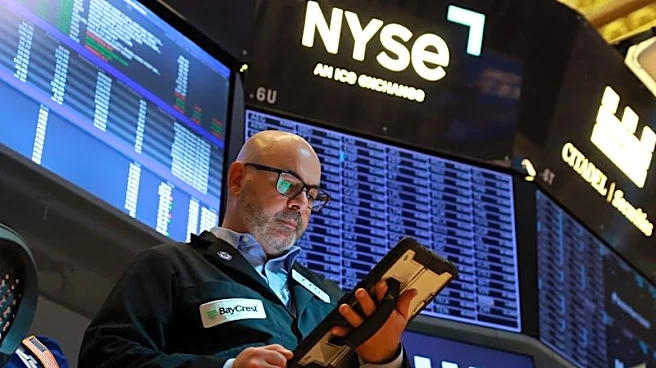
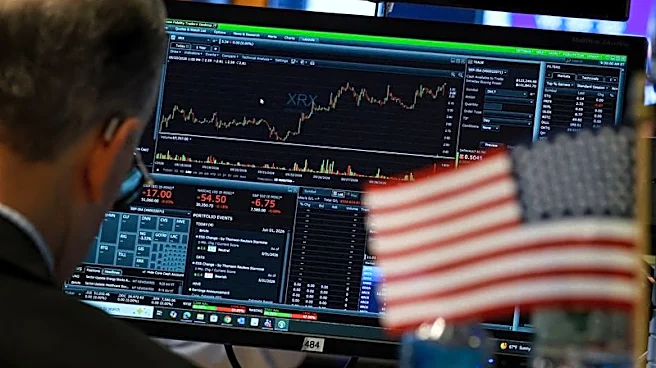
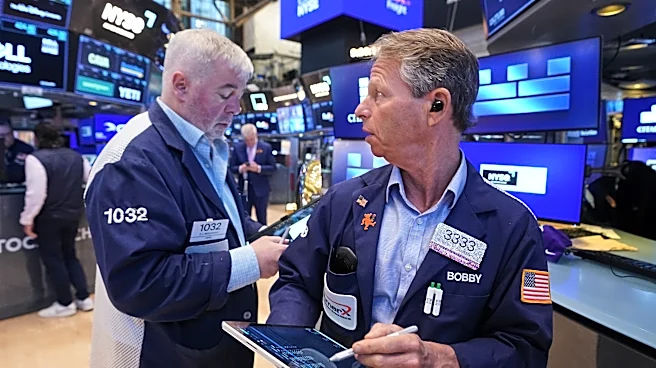
The U.S. stock market has experienced a significant rally over the past nine weeks, with major indexes like the S&P 500 rising nearly 20% from their late March lows. This surge has been driven by investor
optimism surrounding the AI investment boom and strong quarterly earnings. However, analysts are cautioning that the market is 'ripe for volatility spasms.' Key indicators, such as options market metrics and stock correlation levels, suggest that the market's current state of exuberance could lead to a sharp pullback. Brent Kochuba, founder of SpotGamma, and Maxwell Grinacoff, head of U.S. equity derivatives research at UBS, have both highlighted the fragility of the market, noting that the lack of hedging could exacerbate any potential downturn.
Why It's Important?
The potential for a volatility shock in the U.S. stock market is significant as it could impact a wide range of economic stakeholders, from individual investors to large financial institutions. A sudden market downturn could lead to substantial financial losses, disrupt investment strategies, and affect consumer confidence. The current market conditions, characterized by low demand for protective hedges and high investor speculation, increase the risk of a disorderly market reaction. This situation underscores the importance of monitoring market signals and preparing for potential volatility, which could have broader implications for the U.S. economy and global financial markets.
What's Next?
In the coming weeks, several events could act as catalysts for market volatility, including the Federal Reserve's June meeting, the expiration of monthly options, and high-profile IPOs like SpaceX. Additionally, ongoing geopolitical tensions, such as the conflict with Iran, could further influence market dynamics. Analysts suggest that investors should consider building hedges to mitigate potential risks. The market's current state of fragility means that even minor triggers could lead to significant volatility, making it crucial for stakeholders to remain vigilant and responsive to emerging market signals.