



What's Happening?
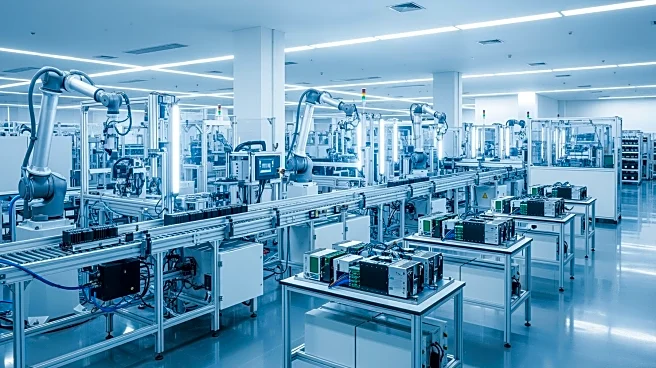
Exicom Tele-Systems has inaugurated a new integrated manufacturing facility in Hyderabad, marking a significant expansion in its manufacturing capabilities for power electronics. The facility, which was opened in the presence of industry leaders from
the telecom and electric vehicle (EV) sectors, represents a major investment in localized manufacturing. Built with an investment of Rs 216 crore, the facility spans 18.4 acres and includes a built-up area of 280,000 square feet. This expansion is expected to increase Exicom's production capacity by 2.5 times in its first phase and create over 750 jobs. The facility is designed to meet the growing demand for EV charging infrastructure, lithium-ion battery systems, and critical power solutions, serving both Indian and export markets.
Why It's Important?
The opening of Exicom's new facility is a strategic move to enhance India's manufacturing capabilities in the power electronics sector, particularly in the context of the growing demand for electric mobility solutions. By increasing production capacity and creating jobs, Exicom is contributing to the local economy and supporting the government's 'Make in India' initiative. The facility's focus on EV charging infrastructure and lithium-ion battery systems aligns with global trends towards sustainable energy solutions and the transition to electric vehicles. This development could position Exicom as a key player in the global market for power electronics, potentially leading to increased exports and economic growth.
What's Next?
As Exicom ramps up production at its new facility, the company is likely to focus on expanding its market reach both domestically and internationally. The increased production capacity will enable Exicom to better meet the demands of the rapidly growing EV market and other sectors requiring reliable power solutions. The creation of new jobs will also have a positive impact on the local community, potentially leading to further economic development in the region. Industry stakeholders and government bodies may closely monitor Exicom's progress as a model for successful localized manufacturing in India.