








What's Happening?
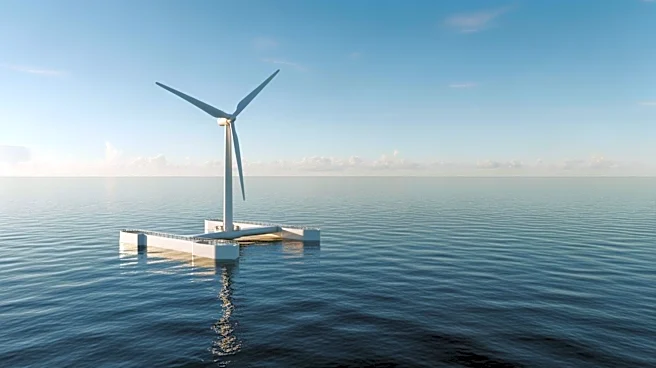
California is taking significant steps to advance its floating wind energy capabilities, despite recent policy shifts under President Trump that have impacted the domestic offshore wind industry. Historically, the U.S. invested heavily in floating wind turbine
technology, but recent changes have led to a decline in domestic opportunities. In response, California has partnered with Denmark to bolster its clean energy initiatives, aiming to harness its offshore wind resources. The state has set a goal of achieving 25 gigawatts of offshore wind energy, leveraging its membership in the Global Offshore Wind Alliance to collaborate with international stakeholders like Norway and Japan.
Why It's Important?
The development of floating wind energy in California is crucial for the state's clean energy goals and economic growth. As the fourth-largest economy globally, California's commitment to renewable energy can influence national and international energy policies. The state's efforts to collaborate with global leaders in floating wind technology, such as Norway and Japan, highlight the potential for innovation and economic partnerships. This move also positions California as a leader in the transition to sustainable energy, potentially offsetting the impact of federal policy changes under President Trump that have hindered the U.S. offshore wind industry.
What's Next?
California's continued investment in floating wind technology is expected to drive further collaboration with international partners, enhancing the state's clean energy infrastructure. The partnership with Denmark and other global stakeholders may lead to technological advancements and increased investment in the sector. As California progresses towards its 25-gigawatt goal, the state could serve as a model for other regions in the U.S. looking to expand their renewable energy portfolios. The success of these initiatives may also prompt a reevaluation of federal policies regarding offshore wind energy.