



What's Happening?
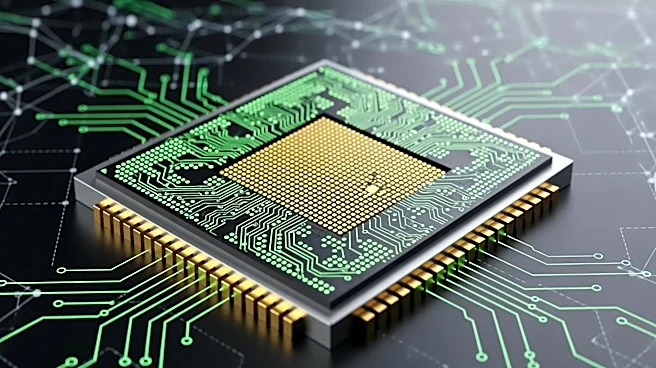
Nvidia CEO Jensen Huang announced the release of the RTX Spark chip at Computex in Taipei, Taiwan. This new chip is designed to enable AI agents to run natively on personal computers, marking a significant shift from Nvidia's traditional focus on data
center chips. The RTX Spark aims to bring AI capabilities directly to personal computers, potentially transforming them in a manner similar to the evolution of smartphones. Nvidia has partnered with Microsoft to develop Windows PCs specifically for running these AI agents. Additionally, Huang emphasized Nvidia's transition into an infrastructure company, unveiling the Nvidia DSX framework for AI factory operations. This framework integrates data centers, power, cooling, networking, compute, software, and data to support large-scale AI training and operations.
Why It's Important?
The introduction of the RTX Spark chip signifies a major development in the personal computing industry, potentially altering the competitive landscape by challenging established players like Intel and AMD. By enabling AI to run directly on personal devices, Nvidia is addressing privacy and speed concerns associated with cloud-based AI processing. This move could lead to increased demand for personal computers equipped with AI capabilities, driving innovation and growth in the tech sector. Furthermore, Nvidia's focus on becoming an infrastructure company highlights the growing importance of comprehensive AI solutions, which could lead to new business opportunities and partnerships across various industries.
What's Next?
As Nvidia rolls out the RTX Spark chip, the company is likely to face increased competition from other tech giants seeking to capitalize on the growing demand for AI-enabled personal computers. The success of this initiative will depend on consumer adoption and the ability of Nvidia and its partners to effectively market and distribute these new devices. Additionally, the development of AI factories through the Nvidia DSX framework could lead to further advancements in AI technology and its applications, potentially influencing sectors such as healthcare, finance, and manufacturing.