






What's Happening?
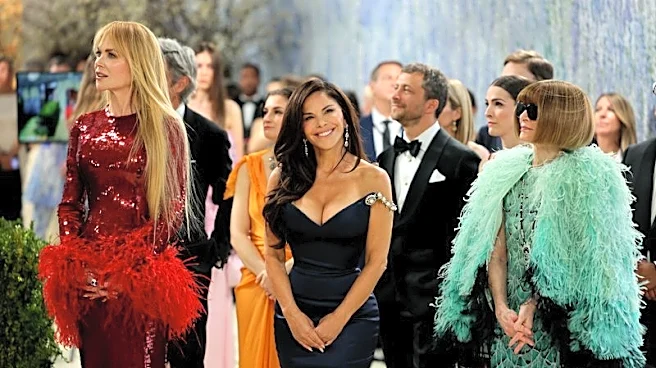
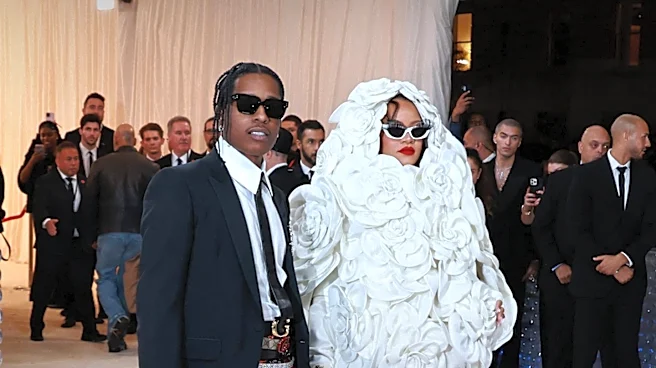
The 2026 Met Gala, sponsored by Jeff Bezos and his wife Lauren Sánchez Bezos, has sparked controversy and debate over celebrity activism and the influence of billionaire money. Taraji P. Henson publicly criticized the event, questioning the participation
of celebrities in a gala funded by Bezos, whose company Amazon is linked to U.S. immigration enforcement policies. The event raised $42 million, but was marked by protests and debates over the ethics of attending a gala sponsored by a figure associated with controversial policies. The 'ICE Out' pin, a symbol of opposition to immigration enforcement, became a focal point of the controversy, as wearing it at the Bezos-backed event was seen as contradictory.
Why It's Important?
The controversy surrounding the Met Gala highlights the growing scrutiny of celebrity activism and the ethical implications of participating in events funded by controversial figures. It raises questions about the authenticity of celebrity activism and the potential for mixed messaging when attending events sponsored by individuals linked to contentious policies. The debate reflects broader societal concerns about wealth inequality, corporate influence, and the role of celebrities in advocating for social change. The event's backlash may prompt celebrities and organizers to reconsider their participation in similar events and the messages they convey.
What's Next?
The fallout from the Met Gala may lead to increased pressure on celebrities to align their public actions with their stated values. Organizers of high-profile events may face greater scrutiny over their choice of sponsors and the potential implications for their brand and message. The ongoing debate could influence future Met Galas and similar events, prompting a reevaluation of sponsorships and the role of celebrity activism in addressing social issues. The conversation around the Met Gala is likely to continue, as it touches on broader themes of wealth, power, and social responsibility.