
What's Happening?
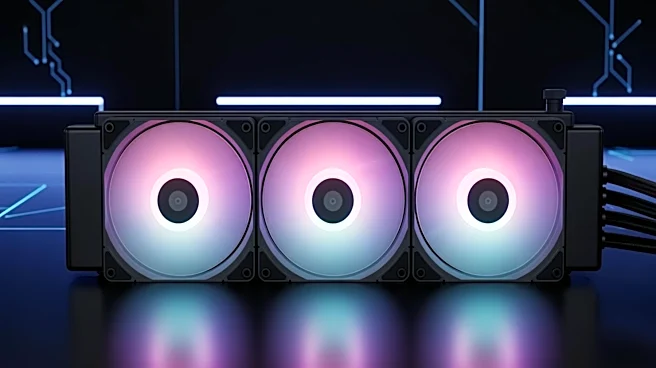
Thermaltake has launched the TH360 V3 Ultra ARGB Sync, an all-in-one liquid cooler that is making waves in the custom PC industry due to its affordability. Priced at $140, this cooler is notable for its 360 mm
aluminum radiator and a 3.95-inch TFT LCD display, which is customizable through Thermaltake's software. The product is compatible with a wide range of Intel CPU sockets and features a high-performance pump and ARGB fans. Despite its competitive pricing, the cooler's warranty is limited to three years in the U.S., which is shorter than the industry standard. The cooler has been praised for its performance, although it is noted to be quite loud during operation.
Why It's Important?
The introduction of the TH360 V3 Ultra ARGB Sync at a lower price point could significantly impact the PC cooling market by making high-performance cooling solutions more accessible to budget-conscious consumers. This move by Thermaltake may pressure competitors to lower their prices or innovate further to maintain market share. The affordability of this cooler could encourage more PC enthusiasts to upgrade their systems, potentially boosting sales in related components like CPUs and RAM. However, the shorter warranty period might deter some consumers concerned about long-term reliability.
What's Next?
As the TH360 V3 Ultra ARGB Sync enters the market, it is likely to prompt responses from competitors who may need to adjust their pricing strategies or enhance their product offerings to remain competitive. Consumers will be watching closely to see if the cooler's performance and durability meet expectations over time. Thermaltake may also consider extending the warranty or improving the software to address consumer feedback and enhance the product's appeal.
Beyond the Headlines
The launch of this affordable cooler highlights a broader trend in the PC hardware industry towards more cost-effective solutions without compromising on performance. This could lead to increased competition and innovation, benefiting consumers with more choices and better value for money. Additionally, the focus on customizable displays and RGB lighting reflects the growing demand for personalization in PC builds, which could influence future product designs.