







What's Happening?
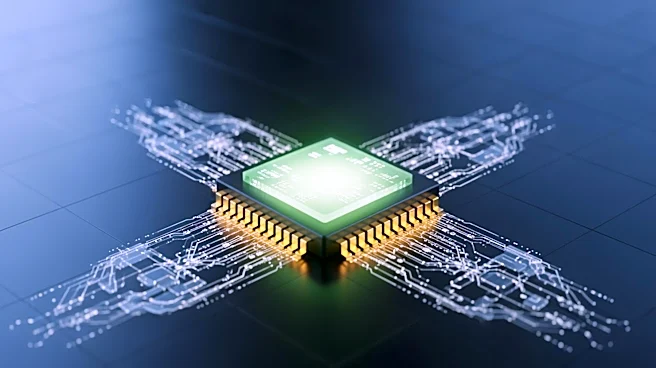
The United States and Taiwan are strengthening their partnership in the semiconductor industry, crucial for the advancement of artificial intelligence (AI) technologies. This collaboration is formalized through the Pax Silica Declaration, which emphasizes
the importance of a secure semiconductor supply chain. Taiwan's expertise in chip manufacturing positions it as a key partner for the U.S., which aims to reduce reliance on foreign production by increasing domestic chip manufacturing. The partnership is expected to bolster economic security and technological progress, with significant investments planned in both countries.
Why It's Important?
The deepening U.S.-Taiwan partnership in semiconductors is pivotal for maintaining a competitive edge in the global AI race. Semiconductors are essential for AI development, and Taiwan's dominance in chip production makes it an indispensable ally. The collaboration aims to secure the supply chain against geopolitical risks and supply disruptions, which could impact technological advancements and economic stability. The partnership also reflects broader strategic interests, as the U.S. seeks to counterbalance China's influence in the tech sector and ensure the resilience of critical infrastructure.
Beyond the Headlines
The U.S.-Taiwan semiconductor partnership has broader geopolitical implications, particularly in the context of U.S.-China relations. Taiwan's role as a 'silicon shield' underscores its strategic importance, while efforts to onshore chip production in the U.S. highlight tensions in balancing domestic capabilities with international cooperation. The partnership also raises questions about the sustainability of the supply chain, given dependencies on critical minerals and geopolitical stability. Addressing these challenges will be crucial for the long-term success of the AI and semiconductor industries.