
What's Happening?
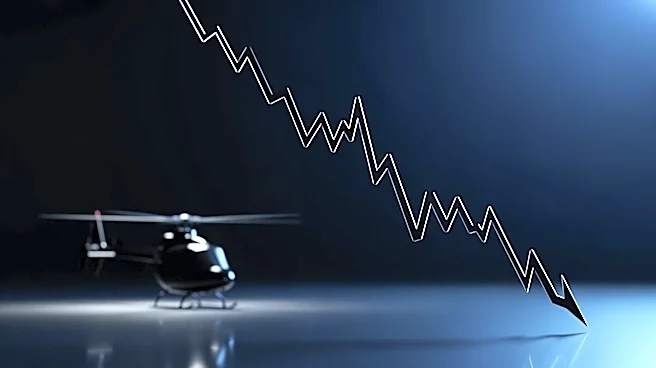
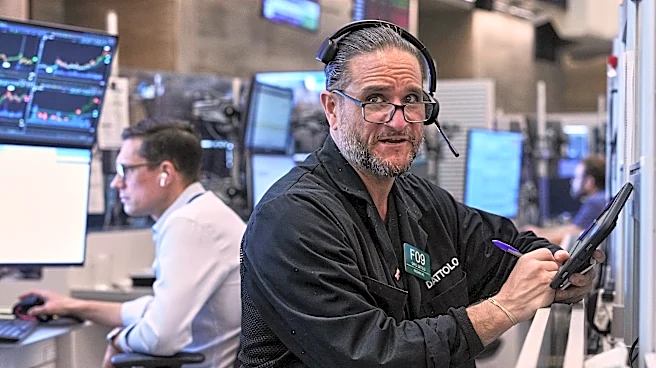
The Dow Jones Industrial Average experienced a significant decline on June 10, 2026, closing below the 50,000 mark with a drop of 953.33 points, or 1.87%, ending at 49,918.78. This downturn was part of a broader
market decline, with the S&P 500 and Nasdaq also falling by 1.62% and 1.98% respectively. The market's performance was influenced by concerns over May's inflation figures, ongoing tensions in the Middle East, and a rout in the technology sector. Oracle, a major tech company, reported earnings that beat estimates and raised profit guidance, yet its shares fell over 7% in extended trading due to plans to raise an additional $20 billion in equity and debt. Additionally, gold futures settled down 3.57%, marking the lowest close since November 2025, as investors reacted to potential interest rate hikes.
Why It's Important?
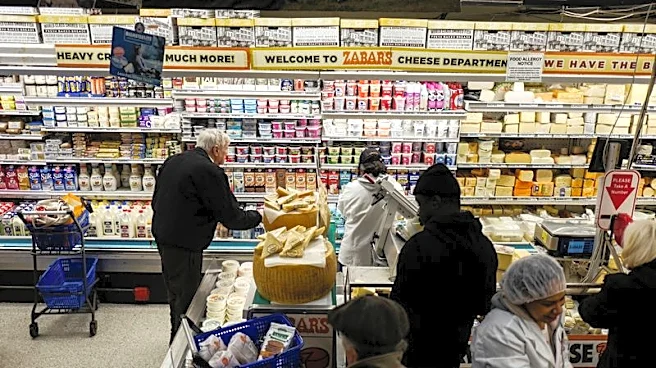
The significant drop in the Dow Jones and other major indices highlights the market's sensitivity to inflation data and geopolitical tensions. The decline reflects investor anxiety over rising prices and potential interest rate hikes, which could impact borrowing costs and consumer spending. The tech sector, a major driver of market growth, is particularly vulnerable to these concerns, as evidenced by Oracle's post-earnings share decline. The broader market downturn could affect investor confidence and lead to increased volatility in the coming weeks. Additionally, the drop in gold prices suggests a shift in investor sentiment towards riskier assets, despite the traditional view of gold as a safe haven during economic uncertainty.
What's Next?
Investors will be closely monitoring upcoming economic data, including jobless claims and the producer price index, to gauge the Federal Reserve's potential response to inflationary pressures. The market's reaction to these data points could provide further insight into the direction of interest rates and the broader economic outlook. Companies like Adobe and Lennar, which are set to report earnings, may also influence market sentiment depending on their performance and guidance. Additionally, geopolitical developments, particularly in the Middle East, will continue to be a key factor in market dynamics.