




What's Happening?
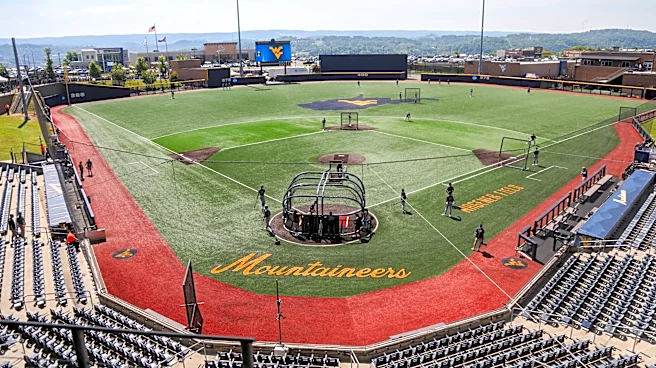
During a Super Regional baseball game at West Virginia University, several fans were injured when a thunderstorm caused a weather delay. The storm, which swept through Morgantown, resulted in heavy winds that toppled an event tent near Kendrick Family
Ballpark. At least five individuals were hospitalized due to the incident. The university expressed gratitude for the quick response from emergency services, including EMS, law enforcement, and fire first responders, who secured the area and provided immediate assistance to the injured. Despite the disruption, the game resumed after a 90-minute delay, with West Virginia securing a 17-1 victory over Cal Poly, marking their first advancement to the Men's College World Series.
Why It's Important?
The incident highlights the potential risks associated with outdoor sporting events, particularly in regions prone to sudden weather changes. The injuries underscore the importance of having robust emergency response plans and infrastructure in place to protect spectators and participants. For West Virginia University, the event was bittersweet; while the team achieved a historic milestone by advancing to the Men's College World Series, the focus remains on the well-being of the injured fans. This situation may prompt other universities and sports organizations to reassess their safety protocols and emergency preparedness to prevent similar occurrences in the future.
What's Next?
In the aftermath of the incident, West Virginia University is likely to conduct a thorough review of its event safety measures and emergency response strategies. The university has already been in contact with local healthcare providers to ensure that those affected receive the necessary support for their recovery. Additionally, the event may lead to increased scrutiny and potential policy changes regarding the management of outdoor events during severe weather conditions. Stakeholders, including university officials and sports event organizers, may collaborate to enhance safety standards and improve communication systems to better protect attendees in the future.