





What's Happening?
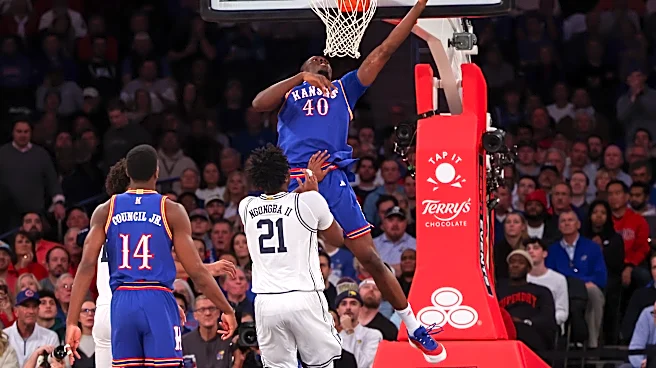
The college basketball transfer portal has become a focal point for team strategies as several high-profile players announce their intentions to switch schools. Notable players such as Flory Bidunga from Kansas, John Blackwell from Wisconsin, and Massamba
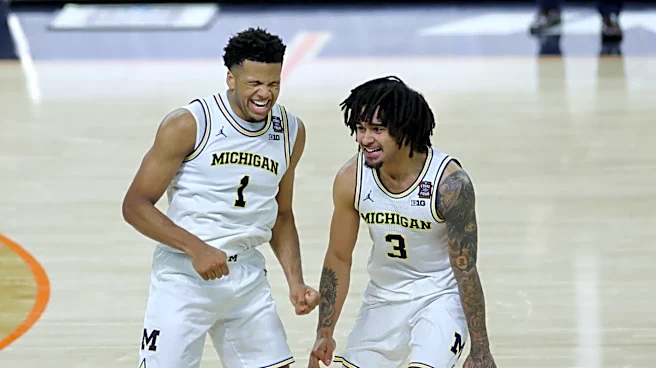
Diop from Arizona State have entered the portal, seeking new opportunities for the upcoming season. JP Estrella, a former Tennessee forward, has committed to Michigan, the reigning national champion, highlighting the portal's role in reshaping team rosters. The transfer portal, which opened recently, will remain active until April 21, allowing players to commit to new schools even after this deadline. The portal's influence is evident as teams like Michigan, which built its championship roster through transfers, continue to leverage it to replace key players.
Why It's Important?
The transfer portal is significantly altering the landscape of college basketball, providing teams with a mechanism to quickly rebuild and enhance their rosters. This shift allows programs to remain competitive by acquiring experienced players who can make immediate impacts. For players, the portal offers a chance to find better fits for their skills and aspirations, potentially leading to improved personal and team performance. The strategic use of the portal by teams like Michigan underscores its importance in maintaining a competitive edge, as it enables them to fill gaps left by departing players and adapt to changing team dynamics.
What's Next?
As the transfer portal remains open, more player movements are expected, which could further alter team compositions and strategies. Teams will continue to evaluate and recruit players who can address specific needs, such as defensive capabilities or offensive prowess. The deadline for players to withdraw from the NBA Draft to retain college eligibility is May 28, which may influence additional decisions. Coaches and teams will need to navigate these changes carefully to optimize their rosters for the upcoming season, potentially leading to shifts in conference power dynamics and national rankings.