


What's Happening?
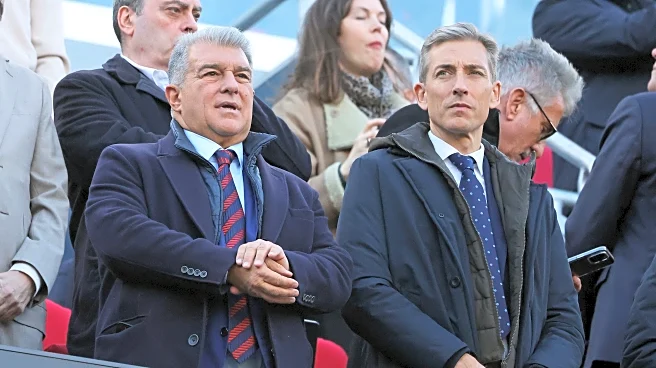
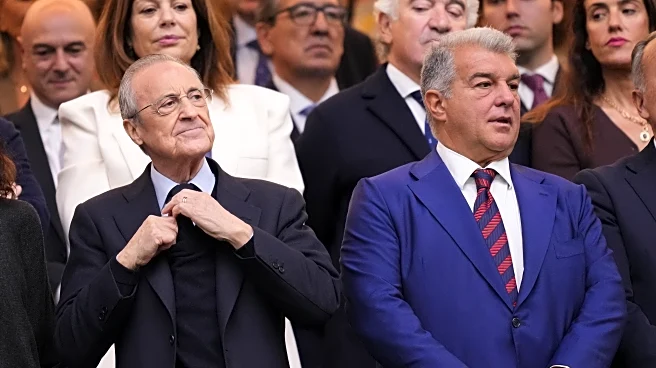
Barcelona, one of the world's most renowned football clubs, operates under a unique fan ownership model. Unlike many major clubs, Barcelona is not owned by a corporation or individual but by its fans, known as 'socios.' These socios pay an annual membership fee and have significant influence over the club's operations, including electing the club president and board of directors. Joan Laporta, currently serving as president, was re-elected in 2021 after a previous term from 2003 to 2010. Under his leadership, the club has navigated financial challenges, including a significant debt burden exacerbated by the COVID-19 pandemic and previous financial mismanagement. The club's financial strategy involves leveraging revenue from a renovated Camp
Nou stadium to alleviate its debt, which is estimated at around €1.5 billion.
Why It's Important?
Barcelona's fan ownership model is significant as it represents a rare structure in modern professional sports, where clubs are typically owned by wealthy individuals or corporations. This model empowers fans, giving them a direct voice in the club's governance and strategic decisions. The financial challenges faced by Barcelona highlight the complexities of maintaining such a model in a competitive sports environment. The club's approach to managing its debt through infrastructure investment reflects a strategic attempt to secure long-term financial stability. This situation underscores the broader implications for sports governance, where fan engagement and financial sustainability must be balanced.
What's Next?
As Barcelona continues to address its financial challenges, the upcoming presidential elections, scheduled for March 15, will be crucial. Joan Laporta and key board members will resign on February 9, allowing new candidates to campaign. The outcome of these elections could influence the club's future direction, particularly in terms of financial management and strategic priorities. The club's ability to successfully navigate its debt situation will be closely watched by stakeholders, including fans, investors, and the broader sports community.