






What's Happening?
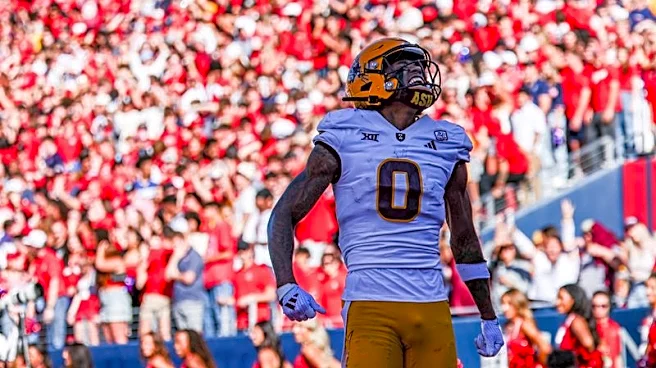
Arizona State University head coach Kenny Dillingham has publicly defended wide receiver Jordyn Tyson against criticisms regarding his competitive spirit ahead of the NFL draft. Dillingham highlighted Tyson's resilience, noting that despite suffering
a deep cut on his hand requiring stitches, Tyson played in a game that week. Additionally, Tyson's commitment to recovering from a midseason hamstring injury, rather than opting out to prepare for the draft, was emphasized as a testament to his dedication. Dillingham's comments come as part of a broader discussion on the culture he is fostering at ASU, which includes a strong emphasis on family values and support for staff and players alike.
Why It's Important?
Dillingham's defense of Tyson is significant as it addresses concerns that could impact Tyson's draft prospects. By publicly supporting Tyson, Dillingham not only boosts the player's reputation but also reinforces the positive culture at ASU, which could enhance the program's ability to attract top talent. This approach may improve team morale and performance, potentially leading to better outcomes on the field. Furthermore, Dillingham's emphasis on family values and support could set a precedent for other programs, influencing how college sports teams manage player and staff welfare.
What's Next?
As the NFL draft approaches, Tyson's performance and character will continue to be scrutinized by scouts and teams. Dillingham's support may influence perceptions, potentially aiding Tyson's draft position. For ASU, maintaining a supportive and family-oriented culture could lead to sustained success in recruiting and retaining talent. The program's ability to navigate these dynamics will be crucial in its efforts to compete at a high level in college football.
Beyond the Headlines
Dillingham's leadership style, which prioritizes family and personal well-being, could have long-term implications for college sports. By fostering an environment where players and staff feel valued beyond their athletic contributions, ASU may set a new standard for collegiate programs. This approach could lead to broader discussions about the role of sports in education and the importance of holistic development for student-athletes.