







What's Happening?
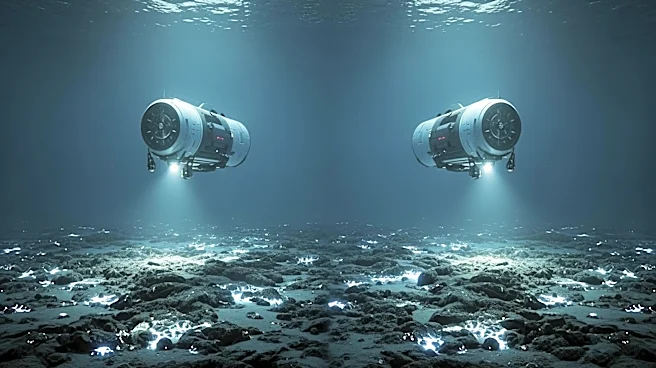
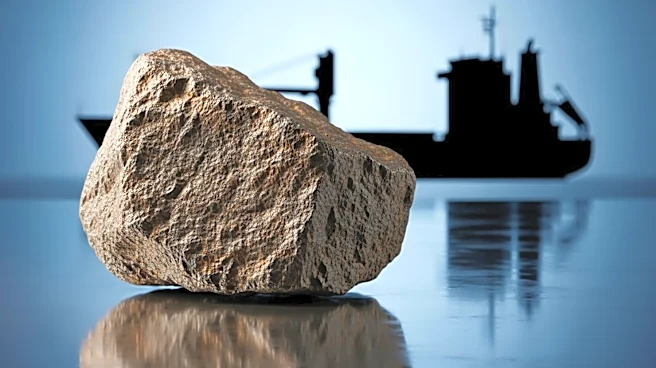
American Ocean Minerals is set to acquire Odyssey Marine Exploration in a reverse takeover valued at approximately $1 billion. This merger aims to capitalize on polymetallic nodule deposits in the Clarion-Clipperton Zone, located in the Pacific Ocean near
Mexico's exclusive economic zone. The transaction, which includes over $150 million in private placement financing, is part of a broader strategy to reduce U.S. reliance on China for critical minerals. The combined entity will operate under the American Ocean Minerals name and trade on Nasdaq. Former Rio Tinto CEO Tom Albanese will serve as chairman, with Mark Justh as CEO. The merger is aligned with a Trump administration executive order to expedite offshore mining permits, reflecting a strategic push to enhance U.S. mineral independence.
Why It's Important?
The merger between American Ocean Minerals and Odyssey Marine Exploration is significant as it represents a strategic move to secure critical mineral resources essential for U.S. industrial and technological sectors. By focusing on deep-sea mining, the U.S. aims to reduce its dependency on China, which currently dominates the supply of many critical minerals. This development could potentially reshape the global mineral supply chain, offering the U.S. a more secure and independent source of essential materials. However, the initiative faces opposition from environmental groups concerned about the ecological impact of deep-sea mining. The merger also highlights the tension between national interests and international regulatory frameworks, as the U.S. push for seabed mining may conflict with global efforts to regulate and protect marine biodiversity.
What's Next?
Pending shareholder approval, the newly formed company will proceed with exploration and development activities in the Clarion-Clipperton Zone and other licensed areas. The focus will be on advancing prefeasibility and environmental studies to ensure compliance with regulatory standards. As the U.S. continues to push for expedited mining permits, international bodies like the International Seabed Authority will likely intensify discussions on establishing a comprehensive commercial mining code. The outcome of these negotiations could influence the pace and scope of future deep-sea mining activities. Additionally, environmental advocacy groups are expected to increase pressure on policymakers to ensure that ecological considerations are prioritized in the expansion of seabed mining operations.
Beyond the Headlines
The merger and subsequent expansion of deep-sea mining activities raise important ethical and legal questions. The potential environmental impact on marine ecosystems is a major concern, as is the equitable distribution of benefits derived from these resources. The debate also touches on the rights of Indigenous peoples and the need for inclusive governance structures that respect international agreements like the UN Convention on the Law of the Sea. As the industry evolves, there will be a growing need for transparent and accountable practices that balance economic interests with environmental stewardship and social responsibility.