

What's Happening?
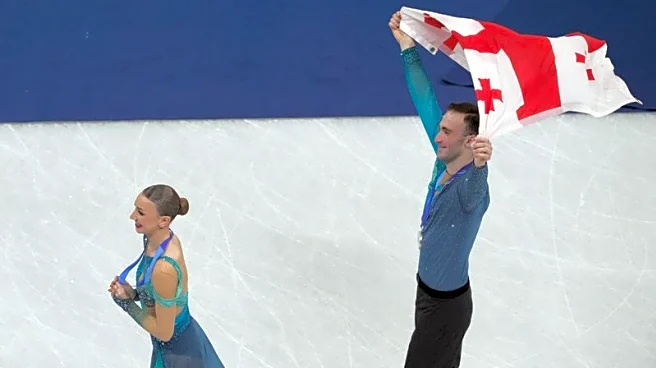
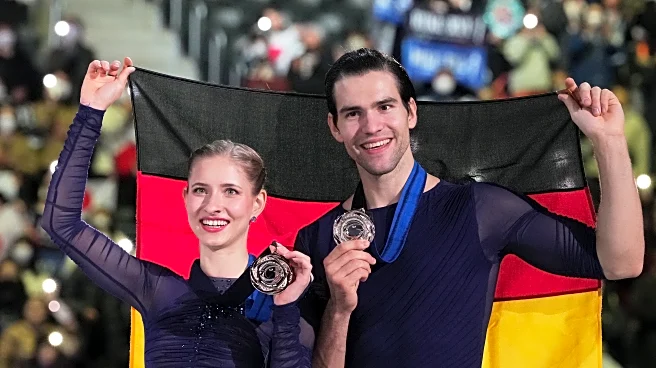
In a stunning turn of events at the Winter Olympics in Milan, the Japanese figure skating pair of Riku Miura and Ryuichi Kihara clinched the gold medal in the pairs competition. Initially positioned in fifth place after a critical error in the short program, the duo delivered a flawless long program performance. Their victory was solidified as the leading pair from Germany, Minerva Fabienne Hase and Nikita Volodin, faltered with errors in their jumps. Miura and Kihara's final score of 231.24 points placed them nearly 10 points ahead of the second-place team from Georgia and over 12 points ahead of the Germans. This unexpected triumph is reminiscent of the 2002 Winter Olympics when American Sarah Hughes won gold in a similar fashion.
Why It's Important?
The victory
of Miura and Kihara is significant as it highlights the unpredictable nature of figure skating competitions, where underdogs can rise to the top. This win not only brings prestige to Japanese figure skating but also inspires athletes worldwide by demonstrating that perseverance and resilience can lead to success. The outcome also underscores the intense pressure faced by leading competitors, which can lead to unexpected results. For the U.S., this event serves as a reminder of the ongoing challenges faced by American pairs in securing Olympic medals, as the drought continues.
What's Next?
Following their victory, Miura and Kihara are likely to become prominent figures in the figure skating community, potentially influencing the next generation of skaters. Their success may lead to increased interest and investment in figure skating in Japan, fostering the development of future champions. Meanwhile, other competing nations, including the U.S., may reassess their training and competitive strategies to enhance their prospects in future international competitions.
Beyond the Headlines
This victory could have broader implications for the sport, encouraging a shift in how athletes approach competitions. The psychological aspect of competing without the pressure of leading may become a focal point in training regimens. Additionally, the win may prompt discussions on the scoring system and its impact on competition outcomes, as well as the role of mental fortitude in achieving athletic success.