





What's Happening?
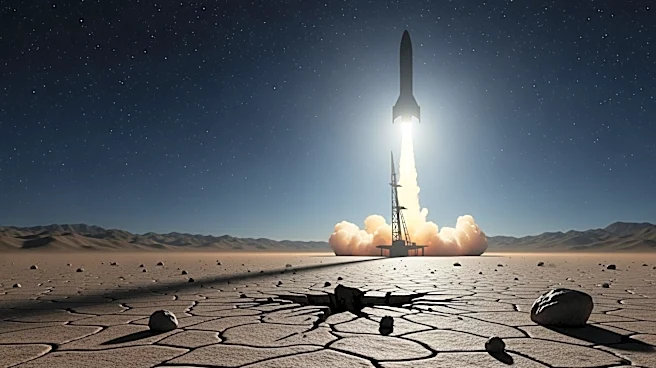
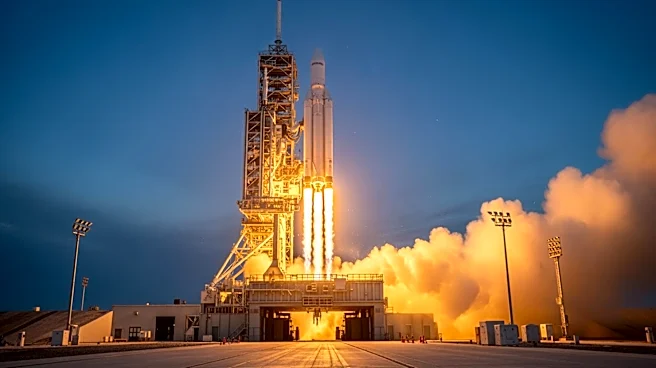
SpaceX is gearing up for the maiden flight of its next-generation Starship V3, following a successful static fire test of the Super Heavy Booster 19 at Starbase, Texas. The test, which lasted approximately 14 seconds, was conducted on the newly constructed
orbital launch mount at Pad 2. This test was crucial for verifying the health of the propulsion systems and stress-testing the new heavy ground infrastructure. Simultaneously, SpaceX teams began rolling Ship 39 to the launch mount, marking the final major operations before the stacking process for Flight 12. This flight will be the official launch debut of Starship V3, featuring the integration of SpaceX's Raptor 3 engines, which are capable of producing significant thrust.
Why It's Important?
The successful static fire of Booster 19 is a significant milestone for SpaceX as it moves closer to launching the Starship V3. This new generation of Starship is designed to carry over 100 tons to low Earth orbit in a fully reusable configuration, representing a major advancement over previous iterations. The integration of Raptor 3 engines, which produce 280 tons of thrust each, makes Booster 19 the most powerful rocket ever ignited. This development is crucial for SpaceX's long-term plans, including the establishment of orbital data centers and achieving a launch cadence similar to the Falcon 9. The success of this mission could have far-reaching implications for the space industry, potentially lowering costs and increasing access to space.
What's Next?
With the successful static fire test completed, SpaceX will proceed with the full stack integration of Ship 39 and Booster 19. This involves a full wet dress rehearsal to verify the propellant loading sequences across both vehicles. If integration and testing proceed smoothly, SpaceX aims to launch Flight 12 within the coming weeks. The final hurdles include completing the stacking process and obtaining regulatory flight clearance. The outcome of this mission will be closely watched by industry stakeholders, as it could set a new standard for reusable spaceflight technology.