






What's Happening?
The United States Trade Representative (USTR) is conducting Section 301 investigations into excess industrial capacity across 16 foreign economies, focusing on whether these countries are leveraging production capacity that exceeds international market
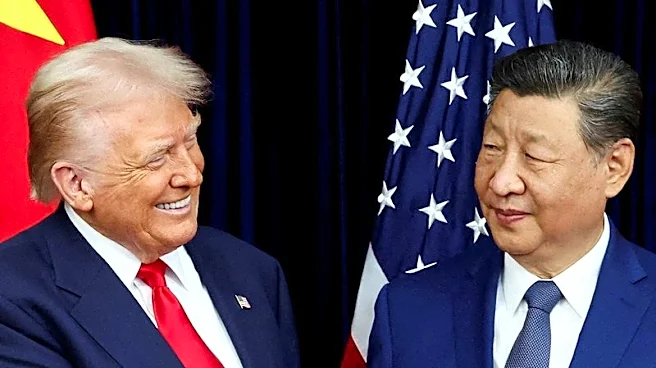
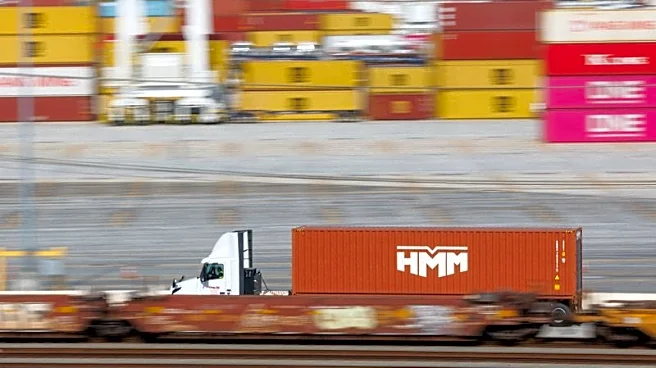
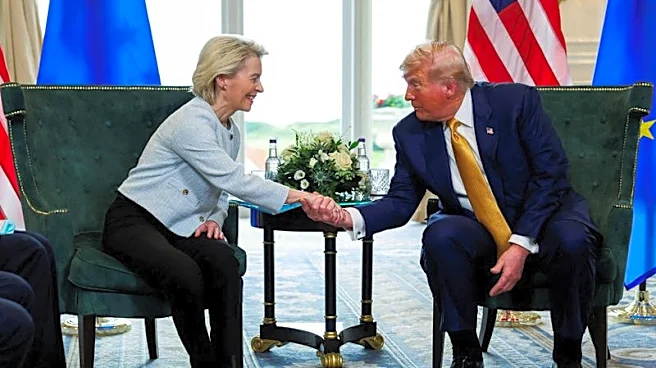
demands. The Trump administration has implicated several countries, including China and the European Union, for flooding the market with products, which depresses demand for American-made goods. Apparel and industry trade groups have testified against the imposition of new tariffs, arguing that they would be burdensome to American industry. The U.S. already imposes high tariffs on textiles, apparel, footwear, and accessories, which contribute significantly to tariff revenue despite making up a small percentage of total imports. Trade groups argue that new tariffs would increase costs for American businesses and consumers.
Why It's Important?
The imposition of new tariffs could have significant economic implications, particularly for the apparel and footwear industries, which already face high tariff rates. These industries contribute disproportionately to tariff revenue, and additional tariffs could increase costs for American families and businesses. The uncertainty around tariff policy disrupts sourcing decisions and undermines long-term planning. The potential for new tariffs also raises concerns about international trade relations, as penalizing other countries for excess production could lead to retaliatory measures. The outcome of the USTR's investigations could impact U.S. competitiveness and domestic manufacturing, as well as international trade dynamics.
What's Next?
The USTR's investigations are ongoing, and the outcome will determine whether new tariffs are imposed. Trade groups are advocating for greater predictability in tariff implementation to support U.S. competitiveness. The administration's approach to tariffs and trade policy will continue to be a point of contention, with potential implications for international trade relations and domestic economic policy. Stakeholders in the apparel and footwear industries will be closely monitoring the situation, as the imposition of new tariffs could significantly impact their operations and cost structures.