


What's Happening?
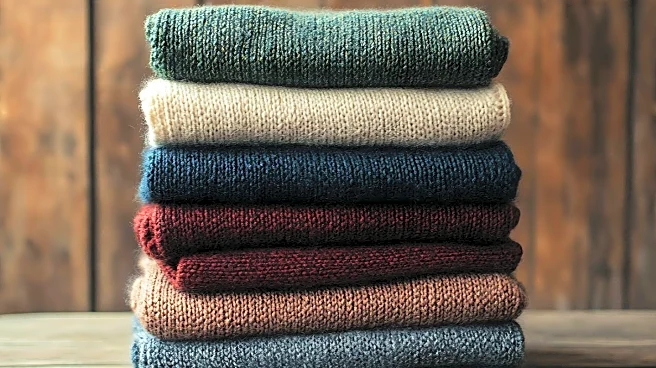
The Or Foundation, a Ghanaian American non-profit, has partnered with the German non-profit The Project Justine (TPJ) to foster a sustainable fashion ecosystem in Ghana. This collaboration merges two existing programs: TPJ's Winneba Weavers, which aims to rejuvenate the local textile economy through research and innovation in heritage crafts, and The Or Foundation's Mabilgu program, which retrains young women working as headporters in Kantamanto Market. The initiative also includes the Tarn program, which teaches these women to create woven textiles from upcycled T-shirts. This partnership addresses multiple aspects of a low-carbon fashion system, including job creation, upskilling, empowerment, environmental relief, localization, and waste
repurposing.
Why It's Important?
This collaboration is significant as it represents a tangible example of a 'just transition' in the fashion industry, where environmental and social impacts are considered together. By focusing on upskilling and job creation, the initiative not only supports the local economy but also empowers women, providing them with sustainable livelihoods. The project highlights the potential of circular fashion ecosystems, like Ghana's Kantamanto Market, to lead the way in sustainable fashion practices. This approach could serve as a model for other regions looking to balance economic development with environmental responsibility.
What's Next?
The success of this collaboration could inspire similar initiatives in other parts of the world, particularly in regions with rich textile traditions. As the program develops, it may attract further investment and interest from global fashion brands looking to incorporate sustainable practices into their supply chains. Additionally, the skills and techniques developed through this partnership could be shared with other communities, promoting a broader adoption of sustainable fashion practices.
Beyond the Headlines
The collaboration between The Or Foundation and TPJ also raises important questions about the role of traditional crafts in modern economies. By investing in heritage crafts, the initiative not only preserves cultural traditions but also adapts them for contemporary markets. This approach challenges the fast fashion model, which often prioritizes speed and cost over quality and sustainability. The project underscores the potential for traditional crafts to contribute to a more sustainable and equitable global fashion industry.