



What's Happening?
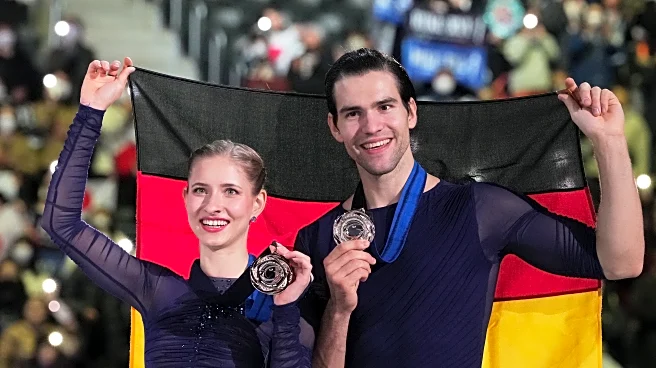
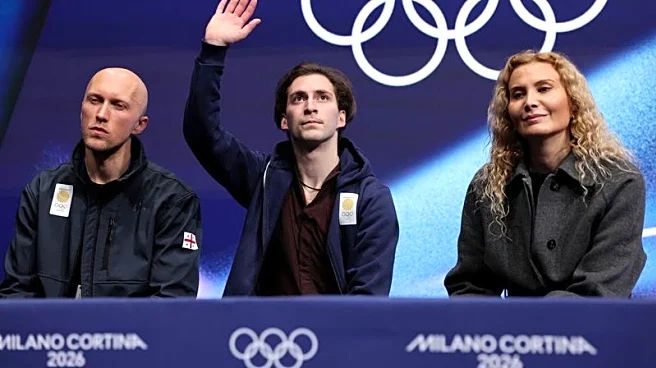
At the Milan Cortina 2026 Olympics, German figure skaters Minerva Fabienne Hase and Nikita Volodin took the lead in the pairs short program. Their performance was marked by precision, contrasting with errors from other competitors. The reigning world silver medalists scored 80.01 points, surpassing Japan's Riku Miura and Ryuichi Kihara, who made a rare mistake and fell to fifth place. European champions Anastasiia Metelkina and Luka Berulava of Georgia secured second place despite a stumble, while Canadians Lia Pereira and Trennt Michaud were third. Hase and Volodin's routine included a significant triple twist lift, with only a minor trip by Hase. This competition marks their Olympic debut as a team, following Hase's challenging experience
at the 2022 Beijing Games.
Why It's Important?
The performance of Hase and Volodin highlights the competitive nature of Olympic figure skating, where precision and consistency are crucial. Their lead sets a high standard for the free program, influencing the dynamics of the competition. The errors by other top contenders, such as Miura and Kihara, demonstrate the pressure athletes face on the Olympic stage. This event also underscores the significance of teamwork and resilience, as seen in Hase's comeback from previous setbacks and Volodin's journey to Olympic competition. The results could impact future pairings and training strategies in the sport.
What's Next?
The pairs will compete in the free program, where Hase and Volodin aim to maintain their lead. The outcome will determine the medalists in this category. Competitors like Miura and Kihara will seek redemption, adding to the event's intensity. The performances could influence future international competitions and athlete preparations. Observers will watch for any strategic adjustments by teams to improve their standings.