
What's Happening?
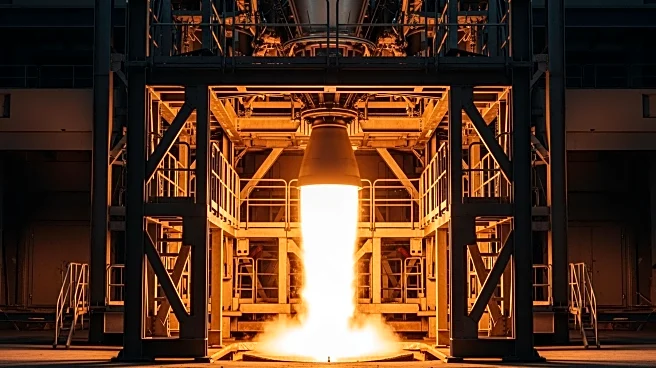
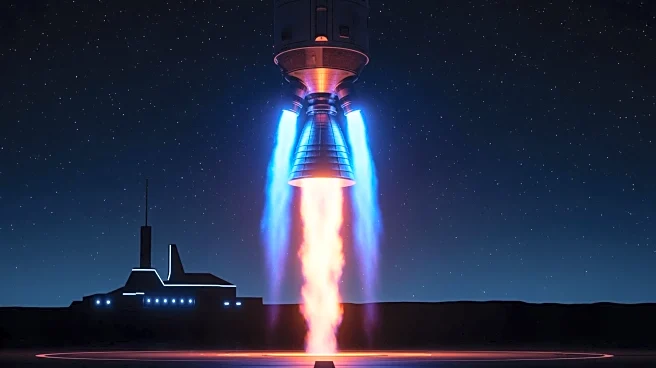
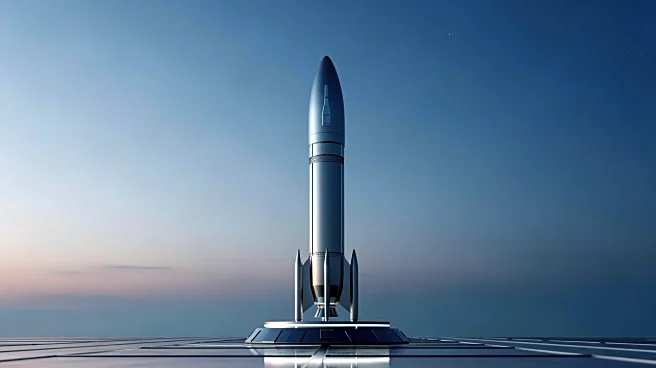
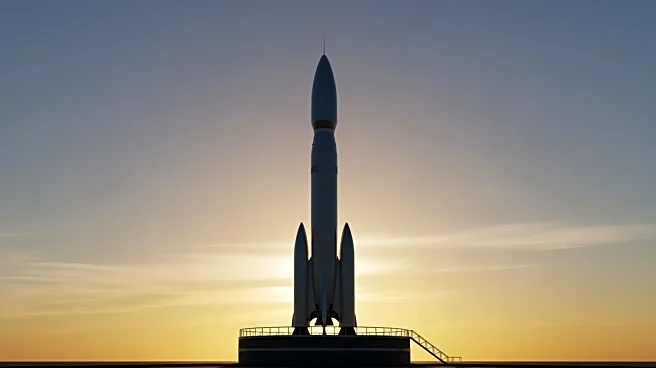
SpaceX has successfully conducted the first static fire test of its next-generation Starship V3, marking a significant milestone in its development. The test took place on March 16 at SpaceX's Starbase site in South Texas, where the Super Heavy first stage
of the Starship V3 was briefly ignited while anchored to Pad 2. This event is notable as it is the first static fire for a Version 3 vehicle, which is designed to support missions to the moon and Mars. The Starship V3 is slightly taller than its predecessor, standing at 408.1 feet, and is equipped with the new V3 Raptor engine, which significantly increases its payload capacity to over 100 tons to low Earth orbit. The test involved 10 engines and ended early due to a ground-side issue, with plans for a full 33-engine static fire test in the future. This development is part of the preparations for Starship's 12th test flight, scheduled for early to mid-April.
Why It's Important?
The successful static fire test of the Starship V3 is a crucial step in SpaceX's ambitious plans to enable human exploration of the moon and Mars. The enhanced capabilities of the V3, including its increased payload capacity and advanced engine technology, represent a significant advancement in space travel technology. This development not only positions SpaceX as a leader in the commercial space industry but also supports broader goals of space exploration and potential colonization. The ability to transport larger payloads to low Earth orbit and beyond could have profound implications for scientific research, satellite deployment, and international space collaborations. Furthermore, the success of the Starship V3 could accelerate timelines for lunar and Martian missions, potentially opening new frontiers for human exploration and habitation.
What's Next?
Following the initial static fire test, SpaceX plans to conduct a full static fire test with all 33 Raptor engines installed on the Super Heavy booster. This will be a critical step before the Starship V3 can proceed to its first test flight, which is anticipated to occur in early to mid-April. The upcoming test flight will be the first for a V3 vehicle and will involve the Booster 19 and Ship 39, which has recently passed a key cryoproofing test. Successful completion of these tests will be essential for SpaceX to demonstrate the Starship V3's capabilities and readiness for future missions. Additionally, SpaceX will need to validate the vehicle's ability to refuel in space, a key requirement for long-duration missions to the moon and Mars.