





What's Happening?
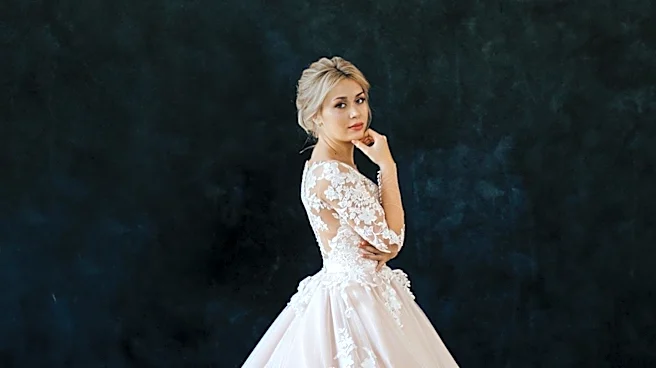
The New York Bridal Fashion Week for Spring 2027 showcased a diverse array of bridal trends, drawing inspiration from both historical and modern influences. Designers presented collections that ranged from the rich embellishments and Victorian necklines
reminiscent of 'Wuthering Heights' to the minimalist '90s styles inspired by Carolyn Bessette Kennedy. This season, unconventional party veils and frothy tulle skirts emerged as popular choices for brides seeking less traditional options. The event highlighted a growing interest in vintage styles, with many brides opting for authentic vintage pieces from the '90s and early 2000s. Designers like Monique Lhuillier and Galia Lahav emphasized simplicity and historical themes, respectively, while others like Tanner Fletcher incorporated three-dimensional floral designs into their collections.
Why It's Important?
The trends emerging from New York Bridal Fashion Week reflect broader shifts in the bridal industry towards personalization and nostalgia. The emphasis on vintage and minimalist styles suggests a move away from traditional bridal norms, allowing brides to express individuality through their wedding attire. This trend could influence bridal retailers and designers to expand their offerings to include more diverse and customizable options. Additionally, the focus on sustainable fashion through vintage sourcing aligns with growing consumer demand for environmentally conscious choices. The bridal industry's adaptation to these trends may impact market dynamics, encouraging innovation and potentially reshaping consumer expectations.
What's Next?
As these trends gain traction, bridal designers and retailers may increasingly focus on offering customizable and vintage-inspired options. The demand for unique and personalized bridal wear could lead to collaborations with vintage boutiques and the development of new lines that cater to these preferences. Additionally, the popularity of non-traditional elements like party veils and tulle skirts may inspire further experimentation in bridal fashion. Industry stakeholders will likely monitor consumer responses to these trends and adjust their strategies to meet evolving demands. Future bridal fashion weeks may continue to explore the balance between historical influences and modern minimalism.
Beyond the Headlines
The rise of vintage and minimalist bridal trends highlights a cultural shift towards valuing sustainability and individuality in fashion. This movement reflects broader societal changes, where consumers increasingly prioritize ethical considerations and personal expression in their purchasing decisions. The bridal industry's response to these trends may also influence other sectors of the fashion industry, encouraging a reevaluation of production practices and design philosophies. As brides seek to create memorable and unique wedding experiences, the emphasis on personalization and sustainability could drive long-term changes in how fashion is conceptualized and consumed.