




What's Happening?
A report from Seramount highlights a perceived productivity issue in remote and hybrid work environments, which it attributes to outdated measurement metrics rather than actual productivity loss. The report suggests that many organizations still rely
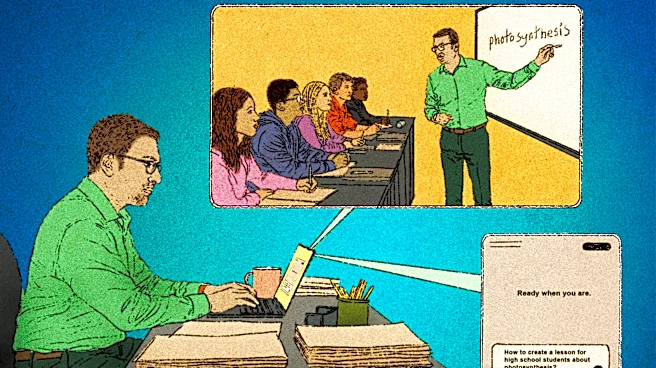
on visible activity as a performance metric, rather than focusing on outcomes and impact. This has led to a phenomenon termed the 'AI productivity paradox,' where AI accelerates work processes but does not necessarily improve quality. The report calls for HR to play a crucial role in addressing this paradox by fostering critical thinking and judgment skills among employees, ensuring that AI is used as a tool to enhance human capabilities rather than replace them.
Why It's Important?
The findings underscore the need for organizations to adapt their performance metrics to better align with the capabilities and challenges of AI and remote work. By focusing on outcomes rather than activity, companies can better assess true productivity and employee engagement. This shift is crucial as AI continues to integrate into workplace processes, potentially leading to reputational, revenue, leadership, and inclusion risks if not managed properly. HR's role in developing a workforce that can effectively use AI to enhance decision-making and problem-solving is vital for maintaining competitive advantage and fostering a culture of innovation and trust.
What's Next?
Organizations are likely to reevaluate their performance metrics and employee development strategies to better integrate AI into their workflows. HR departments may focus on enhancing employees' critical thinking and problem-solving skills to ensure they can effectively leverage AI tools. This could involve training programs and initiatives aimed at improving judgment and decision-making capabilities. As companies strive to balance AI's efficiency with human oversight, those that successfully integrate these elements will likely see improved performance, culture, and employee retention.