







What's Happening?
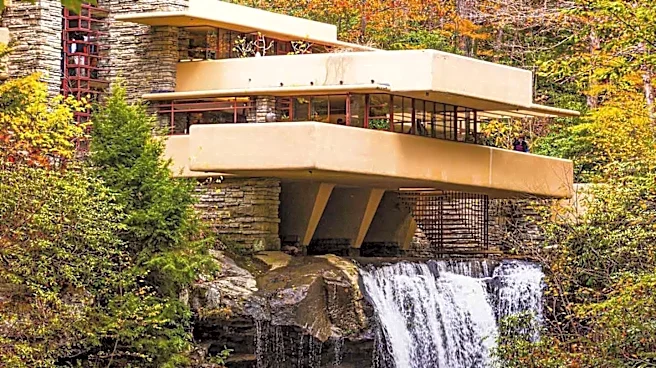
Frank Lloyd Wright, a renowned American architect, remains a significant figure in architecture, with his work continuing to attract attention and admiration. Despite his passing 67 years ago, Wright's designs are celebrated for their timeless quality
and innovative approach. His buildings, such as the Unity Temple in Oak Park, Illinois, and the S.C. Johnson Administrative Complex in Racine, Wisconsin, are considered architectural masterpieces. These structures are not only historical landmarks but also active sites for tours and public engagement. The Frank Lloyd Wright Trust organizes events like the annual Wright Plus tour, allowing the public to explore private homes designed by Wright. His work is supported by numerous nonprofit organizations dedicated to preserving and promoting his architectural legacy.
Why It's Important?
Wright's enduring influence highlights the importance of preserving architectural heritage and the role of architecture in cultural identity. His designs continue to inspire architects and attract tourists, contributing to local economies and cultural tourism. The preservation of Wright's buildings also underscores the value of historical conservation and the need for ongoing investment in maintaining architectural landmarks. Wright's work serves as a benchmark for innovation in design, encouraging contemporary architects to explore new possibilities while respecting historical context.
What's Next?
The continued interest in Wright's work suggests that efforts to preserve and promote his legacy will persist. Upcoming events, such as the 75th anniversary celebration of the Unitarian Meeting House in Madison, Wisconsin, indicate ongoing public engagement with his architecture. Preservationists and architectural enthusiasts are likely to advocate for further restoration projects and educational initiatives to ensure that Wright's contributions remain accessible to future generations.