

What's Happening?
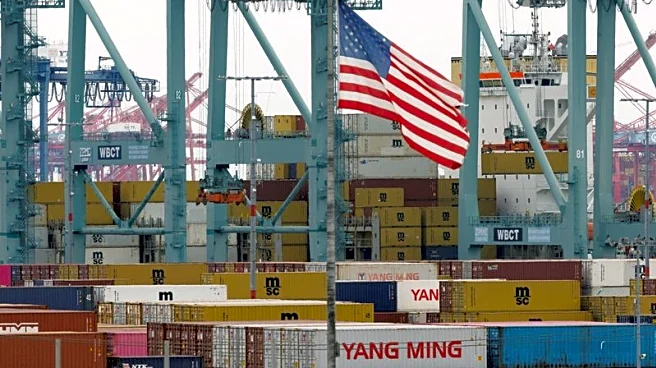
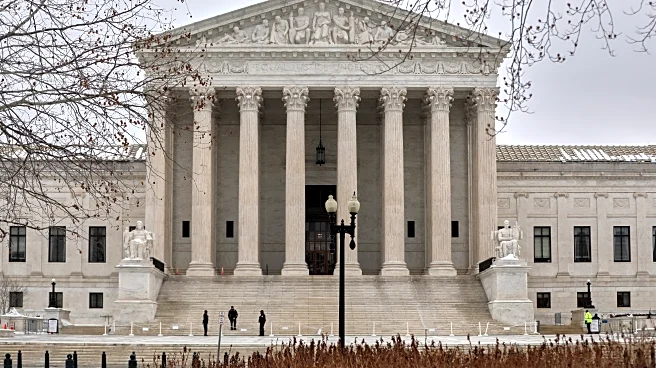
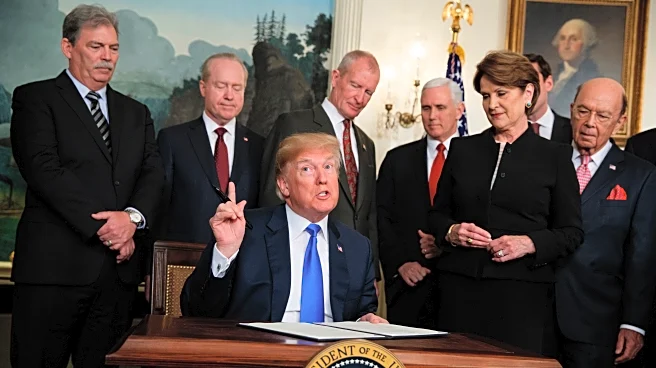
The U.S. Supreme Court has ruled that several tariffs imposed by President Trump were illegal, specifically targeting 'reciprocal' nation-level duties. This decision does not affect tariffs on automobiles and metals, which will continue to be enforced. The ruling comes as part of a broader examination of the legality of tariffs that were implemented during President Trump's administration. These tariffs had been a point of contention, affecting various sectors of the U.S. economy, particularly manufacturing and retail. The decision is expected to have significant implications for international trade relations and domestic pricing structures.
Why It's Important?
The Supreme Court's decision to strike down certain tariffs could lead to changes in the pricing of goods
affected by these duties, potentially lowering costs for consumers and businesses. However, the continuation of auto and metal tariffs means that industries reliant on these imports will not see immediate relief. This ruling may influence future trade policies and negotiations, as it highlights the legal boundaries of tariff imposition. The decision could also impact U.S. relations with trading partners, as it addresses the legality of tariffs that were perceived as protectionist measures.
What's Next?
Following the Supreme Court's ruling, there may be adjustments in trade policies and potential renegotiations with international partners. Businesses affected by the tariffs may seek to adjust their pricing strategies or supply chains in response to the changes. Additionally, the ruling could prompt further legal challenges or legislative actions aimed at clarifying the scope of executive power in trade matters. Stakeholders in the affected industries will likely monitor the situation closely to adapt to the evolving trade landscape.