



What's Happening?
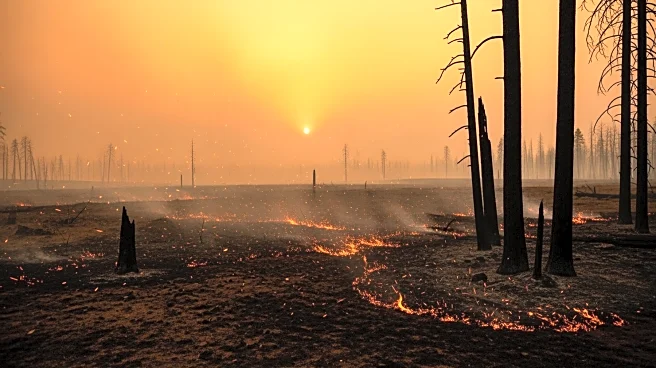
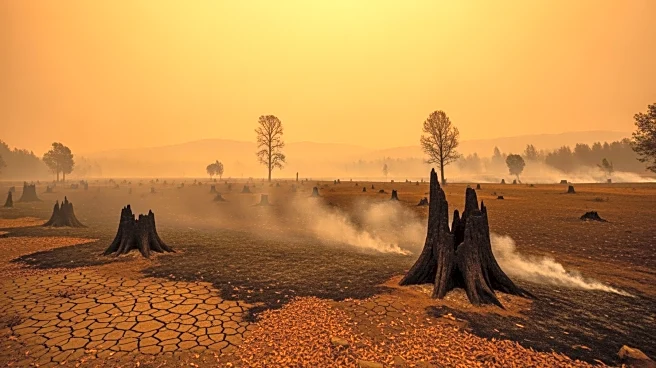
According to a report by Swiss Re Institute, wildfires, severe convective storms, and floods accounted for a record 92% of global natural catastrophe insured losses, totaling $107 billion in 2025. The Palisades and Eaton fires in Los Angeles alone resulted
in $40 billion in insured losses. Severe convective storms, including hailstorms and damaging winds, contributed $51 billion to the total. Despite these high figures, global flood-related insured losses were below average at $3.4 billion. The report highlights that while 2025's losses were below the long-term growth trend due to the absence of a major U.S. hurricane, insured losses are still rising annually by 5% to 7% in real terms.
Why It's Important?
The report underscores the increasing financial impact of natural disasters on the insurance industry, with insured losses expected to reach $186 billion by 2030 if trends continue. This rise in losses highlights the growing need for effective risk management and adaptation strategies. The insurance industry plays a crucial role in closing protection gaps, especially in emerging economies where 80-90% of catastrophe losses are uninsured. The findings emphasize the importance of integrating insurance coverage with risk-adaptation measures to mitigate future losses and ensure economic stability.
What's Next?
Swiss Re's report suggests that if natural catastrophe losses return to long-term levels, they could total $148 billion in 2026. The insurance industry is urged to identify risk drivers and implement measures to manage and reduce risks before losses occur. The report also calls for stronger adaptation and risk management strategies, particularly in emerging economies, to address significant underinsurance for low-frequency, high-impact events like earthquakes.