



What's Happening?
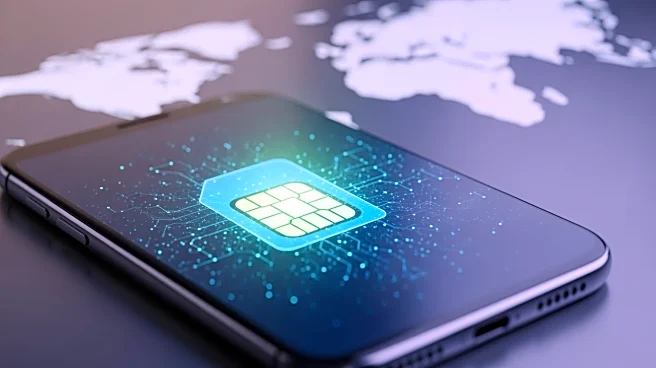
The adoption of eSIM technology is experiencing significant growth, driven by increased travel and enhanced device compatibility. eSIM, which allows users to switch carriers without a physical SIM card, has seen its global adoption rise from 3% to over 5% in recent years. This growth is largely attributed to major smartphone manufacturers like Apple and Google, which have introduced eSIM-only models in the U.S. market. The technology is particularly appealing to travelers, as it offers a convenient and secure way to maintain connectivity across different regions. Companies like AirAlo and Holafly have capitalized on this trend, reporting substantial increases in their customer bases. Despite the growth, challenges remain, such as the cumbersome
process of activating eSIMs, which often requires a secondary device to scan a QR code.
Why It's Important?
The rise in eSIM adoption is reshaping the telecommunications landscape, particularly in the U.S., where 41% of devices launched in 2024 included eSIM capabilities. This shift is significant for both consumers and telecom providers. For consumers, eSIM offers greater flexibility and security, especially for frequent travelers who benefit from seamless connectivity. For telecom providers, the growing demand for eSIM presents both opportunities and challenges. Providers must adapt their infrastructure to support eSIM technology, which could lead to increased competition and innovation in the market. Additionally, the trend towards eSIM could drive further investment in related startups, as evidenced by recent funding rounds for companies like AirAlo and Holafly.
What's Next?
As eSIM technology continues to gain traction, telecom providers and device manufacturers are likely to focus on simplifying the activation process to enhance user experience. This could involve developing more intuitive methods for eSIM installation that do not require additional devices. Furthermore, as more countries and regions adopt eSIM, there may be increased collaboration between telecom providers and travel-related businesses to offer bundled services. The market could also see consolidation as larger players seek to acquire successful eSIM startups. In the long term, the widespread adoption of eSIM could lead to a decline in the production and use of physical SIM cards, further transforming the telecom industry.
Beyond the Headlines
The shift towards eSIM technology also raises questions about data privacy and security. As eSIMs become more prevalent, ensuring the protection of user data will be crucial. Additionally, the transition to eSIM could have environmental benefits by reducing the need for physical SIM cards, which contribute to electronic waste. However, the move to digital SIMs may also require significant changes in telecom infrastructure, which could pose challenges for smaller providers. The cultural shift towards digital connectivity may also influence consumer behavior, as users become more accustomed to managing their mobile services digitally.