





What's Happening?
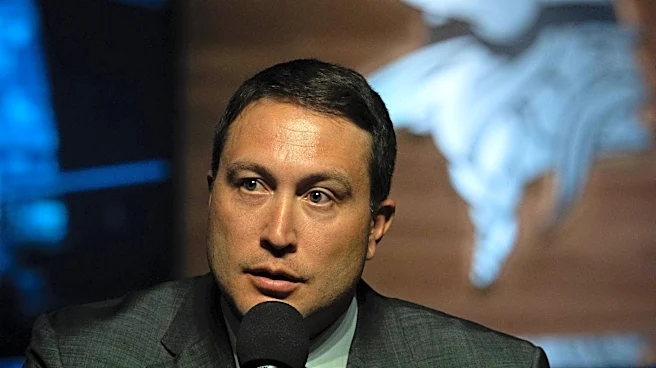
Nolan Teasley, the new general manager of the Minnesota Vikings, has made significant additions to the team's front office by hiring Andrew Healy and Trent Kirchner as assistant general managers. Healy, previously the vice president of research and strategy
with the Cleveland Browns, is known for integrating data and advanced insights into football operations. His background includes a Ph.D. in economics from MIT and experience with Football Outsiders. Kirchner, who has worked alongside Teasley for 13 years in the Seattle Seahawks' front office, was the VP of player personnel, overseeing college scouting and pro personnel. These hires are part of Teasley's strategy to balance analytics with traditional scouting methods, aiming to enhance the Vikings' player evaluation and acquisition processes.
Why It's Important?
The hiring of Healy and Kirchner is crucial for the Vikings as it reflects a strategic shift towards a more data-driven approach in their football operations. This move could potentially improve the team's decision-making processes in player evaluation and roster construction. By combining Healy's expertise in analytics with Kirchner's experience in scouting, the Vikings aim to create a more comprehensive and effective front office. This could lead to better player acquisitions and overall team performance, impacting the Vikings' competitiveness in the NFL. The integration of advanced analytics in sports management is becoming increasingly important, and the Vikings' commitment to this approach could set a precedent for other teams.
What's Next?
With these new hires, the Vikings are expected to further develop their front office strategies, focusing on integrating data analytics with traditional scouting. The team will likely continue to refine their player evaluation processes, potentially leading to more strategic draft picks and player acquisitions. As the NFL season progresses, the effectiveness of these hires will be closely monitored by stakeholders and fans. The success of this approach could influence other NFL teams to adopt similar strategies, emphasizing the growing importance of data analytics in sports management.