




What's Happening?
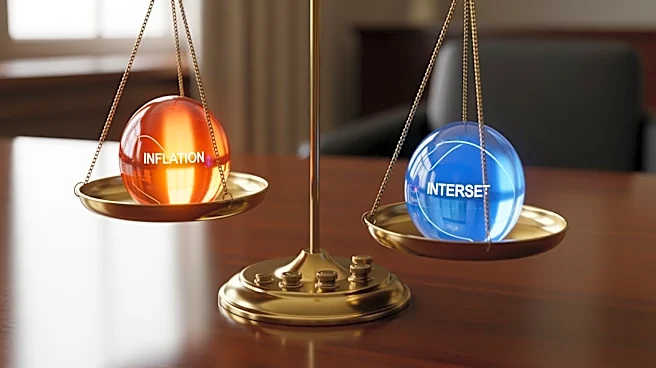
Chicago Federal Reserve President Austan Goolsbee has raised concerns that rising productivity might not necessarily lead to lower inflation. Speaking at a Milken Institute conference, Goolsbee suggested that if businesses and households anticipate future
productivity gains, they might increase spending, potentially leading to higher prices and necessitating tighter monetary policy. This perspective contrasts with incoming Fed Chair Kevin Warsh, who believes higher productivity could have a disinflationary effect. Goolsbee emphasized the need for caution, noting that expectations of future growth could drive current economic activity, potentially overheating the economy before productivity gains are realized. The debate over the implications of productivity on interest rates remains active, with historical references to former Fed Chair Alan Greenspan's stance in the 1990s.
Why It's Important?
The discussion around productivity and inflation is crucial as it influences monetary policy decisions that affect the broader economy. If productivity gains lead to increased spending and inflation, the Federal Reserve might need to raise interest rates to prevent economic overheating. This could impact borrowing costs for businesses and consumers, potentially slowing economic growth. Conversely, if productivity leads to lower inflation, it could allow for more accommodative monetary policy, supporting economic expansion. The outcome of this debate will have significant implications for financial markets, investment strategies, and economic planning.
What's Next?
As the Federal Reserve navigates these complex dynamics, stakeholders will closely watch for policy signals. The potential for interest rate adjustments will depend on how productivity trends evolve and their impact on inflation. Businesses and investors may need to adjust their strategies based on the Fed's actions. Additionally, the deployment of artificial intelligence and other technologies could further influence productivity and economic conditions, adding another layer of complexity to the Fed's decision-making process.