


What's Happening?
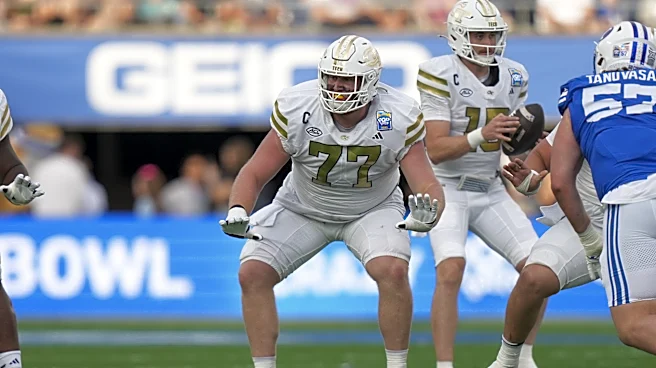
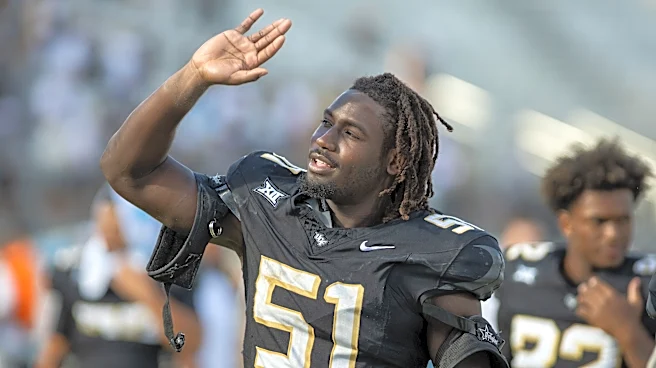
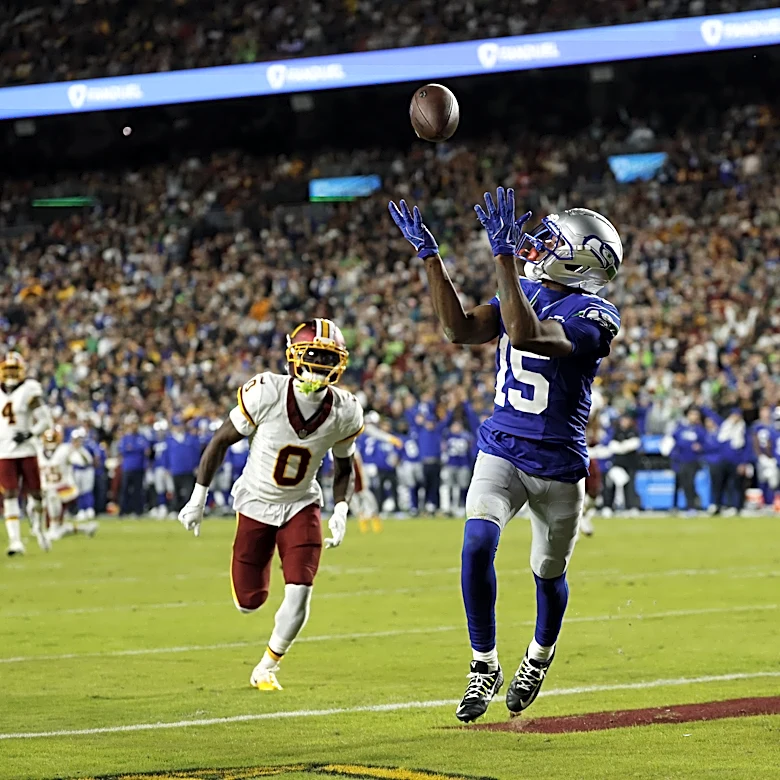
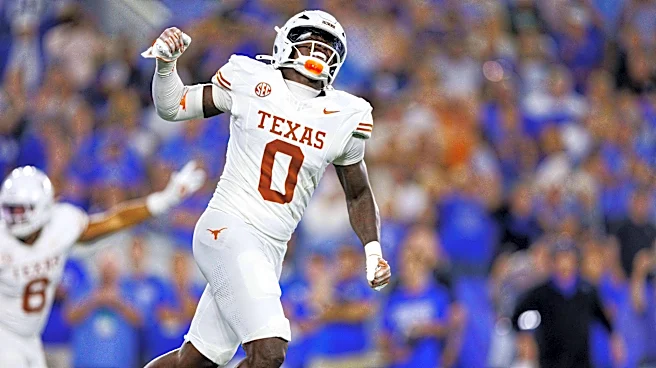
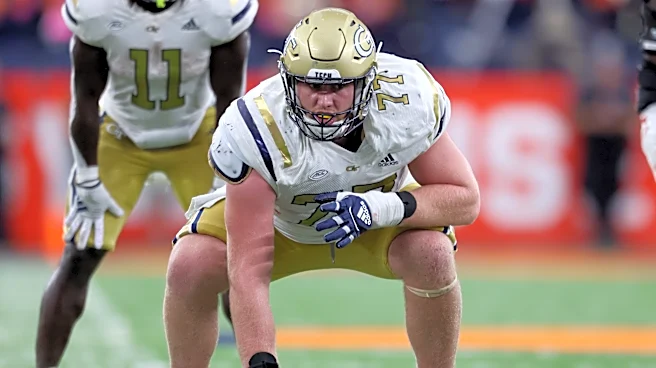
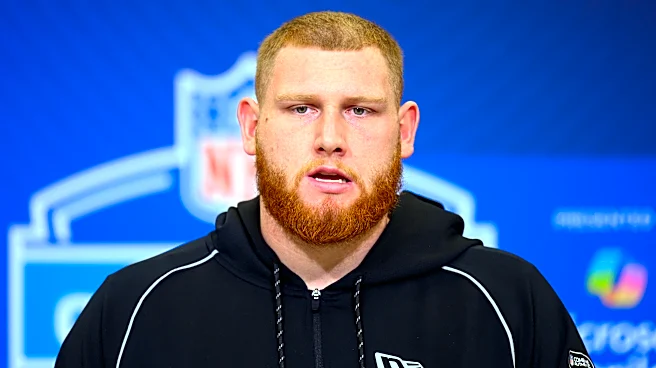
In the upcoming NFL Draft, two players, Malachi Lawrence from UCF and Keylan Rutledge from Georgia Tech, are emerging as potential surprise first-round picks. Lawrence, known for his speed and length as an EDGE rusher, has impressed scouts with his performance
at the combine, despite some criticisms regarding his play strength and run defense. Rutledge, an offensive guard, has demonstrated power and toughness throughout his college career, and his strong combine results have increased his appeal to teams looking for versatile linemen. Both players have seen their draft stock rise significantly, with Lawrence's explosiveness and Rutledge's movement skills catching the attention of teams drafting in the later stages of the first round.
Why It's Important?
The potential first-round selection of Lawrence and Rutledge highlights the dynamic nature of the NFL Draft, where late risers can significantly impact team strategies. Lawrence's ability to pressure quarterbacks and Rutledge's versatility in offensive schemes could provide immediate benefits to teams looking to strengthen their rosters. Their rise also underscores the importance of combine performances in evaluating player potential beyond college statistics. Teams that invest in these players may gain valuable assets that contribute to their competitive edge, particularly in positions that require depth and adaptability.
What's Next?
As the draft approaches, teams will continue to evaluate Lawrence and Rutledge, considering their fit within existing team structures and long-term development potential. Analysts and insiders will closely monitor mock drafts and team needs to predict where these players might land. The decisions made during the draft will influence team dynamics and could lead to strategic shifts in player development and game planning. Both players will need to address any remaining technical deficiencies to maximize their impact at the professional level.
Beyond the Headlines
The rise of Lawrence and Rutledge in the draft process reflects broader trends in player evaluation, where athleticism and potential often outweigh traditional metrics. This shift may encourage teams to prioritize physical attributes and adaptability in future drafts, potentially altering scouting and training practices. Additionally, their success could inspire other players to focus on combine preparation as a critical component of their draft strategy, emphasizing the role of athletic testing in career advancement.