
What's Happening?
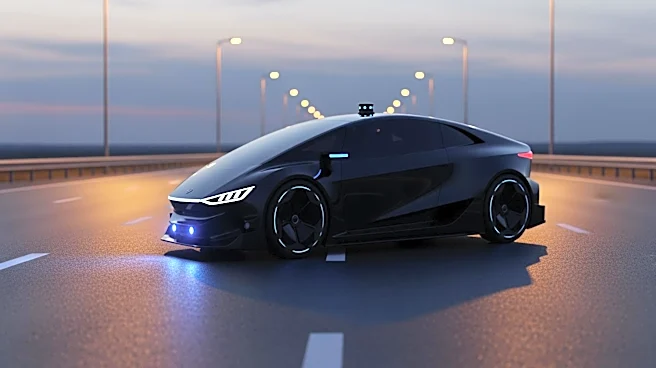
Waymo, a unit of Alphabet Inc., is set to introduce a new autonomous vehicle specifically designed for robotaxi services, named the Ojai. This vehicle will be available for public rides in California and
Arizona, operating without human supervision. Initially, the Ojai will be accessible to select riders in San Francisco, Los Angeles, and Phoenix. The vehicle is a product of a collaboration between Waymo and Zeekr, a subsidiary of the Chinese automaker Geely Automobile Holdings. This partnership, announced in 2021, aims to enhance Waymo's fleet with a purpose-built vehicle that offers a more spacious cabin and improved accessibility features. The Ojai will also feature the latest generation of Waymo's autonomous driving system. The initial rides will be free to gather user feedback before expanding to more cities.
Why It's Important?
The deployment of the Ojai represents a significant step in the evolution of autonomous ridehailing services in the U.S. Waymo's initiative could potentially reshape urban transportation by reducing reliance on human-driven vehicles, thus impacting the ridehailing industry significantly. The collaboration with Zeekr also highlights a growing trend of Western companies partnering with Chinese automakers, despite existing U.S. policies that restrict Chinese companies in the American market. This move could influence future partnerships and technological exchanges between the U.S. and China. Additionally, the introduction of a purpose-built autonomous vehicle could improve operational efficiency and customer experience, setting a new standard in the industry.
What's Next?
Waymo plans to expand the availability of the Ojai to more cities over time, based on the feedback from initial users. The company is also working to increase production at its Arizona plant to tens of thousands of vehicles annually. As Waymo continues to test and refine its autonomous driving technology, it may face regulatory challenges and competition from other companies like Tesla and Amazon's Zoox. The success of the Ojai could lead to broader acceptance and integration of autonomous vehicles in public transportation systems, potentially influencing urban planning and infrastructure development.
Beyond the Headlines
The introduction of the Ojai could have broader implications for the automotive and technology industries. It may accelerate the shift towards electric and autonomous vehicles, prompting traditional automakers to innovate and adapt. The partnership with Zeekr also underscores the complexities of international collaborations in the face of geopolitical tensions. As autonomous vehicles become more prevalent, there will be ongoing discussions about safety, data privacy, and the ethical implications of AI-driven transportation. These developments could lead to new regulatory frameworks and standards for autonomous vehicle operations.