








What's Happening?
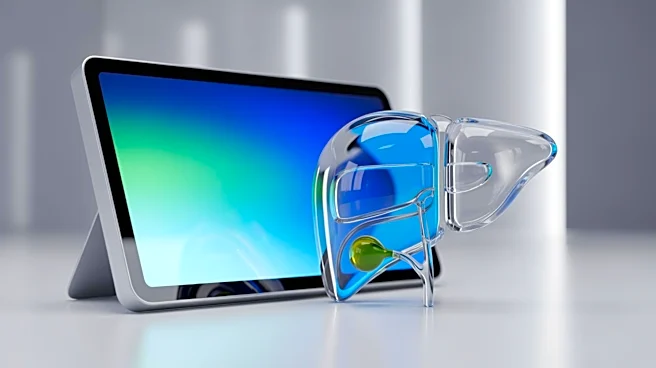
ENDRA Life Sciences Inc. has announced successful multi-site clinical validation results for its TAEUS Liver device, which demonstrates strong concordance with MRI-PDFF, high reproducibility, and consistent performance across clinical sites. The study
involved 64 patients from the U.S. and Canada, including an external validation site in London, Ontario. The TAEUS Liver device's thermoacoustic fat fraction measurement closely tracked MRI-PDFF results for patients with metabolic dysfunction-associated steatotic liver disease (MASLD) and those with elevated body mass index (BMI). Key results included a correlation to MRI-PDFF of r=0.90, diagnostic accuracy with AUROC between 0.95-0.99, and reproducibility with ICC=0.89 across operators. The device aims to provide MRI-aligned performance in a portable, point-of-care format at a lower cost than traditional MRI exams.
Why It's Important?
The validation of the TAEUS Liver device is significant as it offers a cost-effective and portable solution for assessing liver fat, which is crucial for the more than two billion people worldwide living with MASLD. The device's ability to deliver MRI-like accuracy at a fraction of the cost could revolutionize routine liver fat assessment, making it feasible for widespread clinical use. This advancement is particularly important as new metabolic therapies enter the market, requiring precise monitoring of treatment-driven changes in liver fat. The TAEUS system's performance contrasts sharply with ultrasound techniques, which often suffer from high inter-observer variability and subjective interpretations.
What's Next?
ENDRA Life Sciences plans to continue its regulatory pathway for the TAEUS Liver device, potentially expanding its use in routine clinical practice and pharmaceutical clinical trials. The device could be utilized for patient recruitment and follow-up in trials, supporting the detection of small, incremental changes in liver fat without the cost burden of repeated MRI scans. As the company moves forward, it will focus on securing necessary regulatory approvals and certifications to bring the device to market.