
What's Happening?
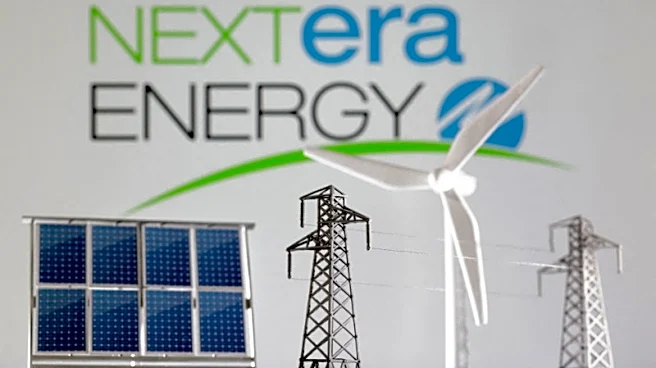
NextEra Energy has announced its intention to acquire Dominion Energy in a transaction valued at approximately $67 billion. This merger will combine two of the largest utility companies in the United States,
as both firms anticipate increased electricity demand driven by the expansion of AI infrastructure. The deal involves NextEra exchanging about eight-tenths of a share of its stock for each outstanding share of Dominion, valuing Dominion at around $66.8 billion. The merger is expected to close within 12 to 18 months, pending regulatory approvals from various state and federal bodies. The combined entity will serve approximately 10 million utility customers across Florida, Virginia, North Carolina, and South Carolina. NextEra shareholders will own 74.5% of the new company, while Dominion investors will hold 25.5%.
Why It's Important?
The merger between NextEra and Dominion Energy is significant as it creates the world's largest regulated electric utility business, positioning the combined entity to better meet the growing electricity demands associated with AI infrastructure. This development is crucial for the energy sector, as U.S. utility firms are projected to spend $1.4 trillion over the next five years to accommodate rising electricity needs. The merger also promises $2.25 billion in bill credits for Dominion's customers in Virginia, North Carolina, and South Carolina, potentially reducing costs for consumers. However, the deal will undergo rigorous scrutiny from regulatory bodies, including the Federal Energy Regulatory Commission and the Justice Department, to ensure it benefits consumers and maintains fair competition.
What's Next?
The merger's completion is contingent upon receiving approvals from several regulatory agencies, which will assess the deal's impact on competition and consumer prices. If approved, the merger could lead to significant changes in the energy market, influencing how utility companies operate and invest in infrastructure. Stakeholders, including consumers and investors, will closely monitor the regulatory review process and the merger's potential effects on electricity prices and service quality. The outcome of this merger could set a precedent for future consolidations in the utility sector, particularly as companies seek to adapt to technological advancements and increased energy demands.