



What's Happening?
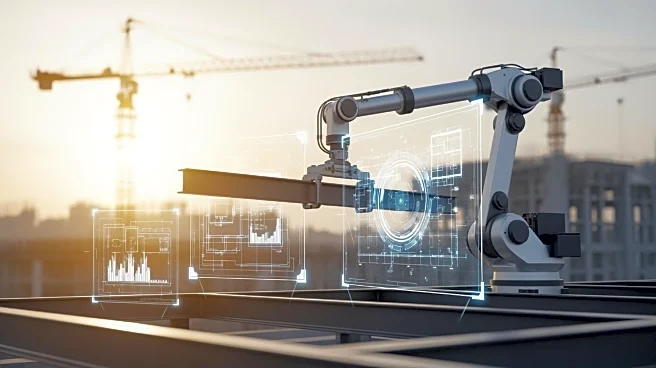
The construction industry is undergoing a significant transformation driven by the adoption of advanced technologies. This shift is not only changing how construction projects are executed but also who is attracted to the industry. Modern tools such as robotic total stations, augmented reality, and AI are becoming integral to construction sites, making the industry more appealing to tech-savvy individuals. The industry faces a critical workforce shortage, with an estimated need for nearly half a million new workers by 2026. Companies are investing in technology to reshape workforce dynamics, improve operator satisfaction, and enhance training timelines. Educational institutions and industry collaborations are playing a crucial role in building
a technology-literate workforce, with programs that integrate digital tools into training and apprenticeship programs.
Why It's Important?
The integration of technology in construction is crucial for addressing the industry's workforce crisis. By adopting digital tools, companies can attract and retain talent, making construction jobs more engaging and less physically demanding. This transformation is essential for sustaining growth in a competitive labor market. The use of technology not only improves productivity and precision but also positions companies as employers of choice. As the industry faces a metaphorical 'Category 5' workforce storm, technology adoption emerges as a key solution. It allows for immediate improvements in workforce dynamics, unlike policy changes that take years to implement. The construction industry's ability to adapt to these changes will determine its capacity to handle future projects and maintain competitiveness.
What's Next?
The construction industry must continue to invest in technology and collaborate with educational institutions to build a skilled workforce. Companies need to engage consistently with training programs and create clear career pathways for workers. Expanding the talent pool by recruiting women and veterans is also critical. Major contractors are leading by example, partnering with schools and trade associations to develop effective training programs. The industry's future success depends on how quickly firms can implement comprehensive strategies that integrate technology, education, and workforce development. Those who move decisively will secure their competitive position in a labor market that shows no signs of easing.
Beyond the Headlines
The adoption of technology in construction has deeper implications beyond immediate workforce challenges. It represents a cultural shift in an industry traditionally seen as labor-intensive. By embracing digital tools, the construction sector is redefining its identity and appeal to younger generations. This shift also highlights the importance of continuous learning and adaptation in a rapidly evolving technological landscape. The industry's ability to integrate technology effectively will influence its long-term sustainability and growth. As construction becomes more technology-driven, it may also lead to changes in regulatory standards and safety protocols, further shaping the industry's future.