


What's Happening?
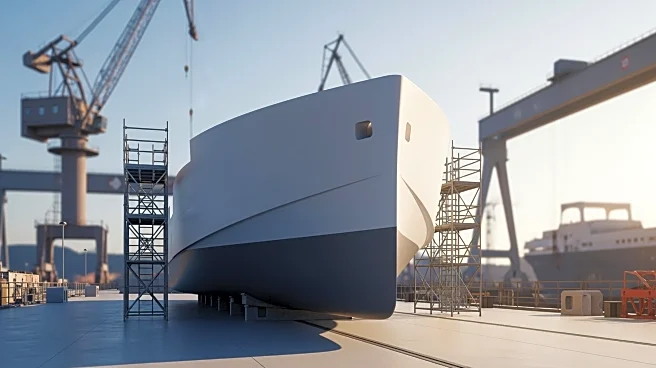
Deutsche Offshore Schifffahrt (DO) has commenced the construction of a new fleet of construction commissioning service operation vessels (C-CSOVs) at the CSSC Huangpu Wenchong Shipyard in Guangzhou, China. The first vessel, named DO Joule, is part of a series
of four ships ordered by Schoeller Holdings. These vessels are designed by Norway-based Salt Ship Design and are intended to support various operations in the offshore energy sector, including construction, commissioning, and maintenance. Columbia Shipmanagement will handle the technical management, while DO will oversee development, operation, and commercial management. The vessels are equipped with advanced features such as dynamic positioning capabilities, a helicopter deck, and a modular working deck.
Why It's Important?
The construction of these vessels signifies a strategic investment in the offshore energy market, which is crucial for supporting renewable energy projects and maintaining existing offshore infrastructure. The introduction of these advanced C-CSOVs could enhance operational efficiency and safety in offshore activities, potentially leading to cost savings and increased productivity for energy companies. This development also highlights the growing collaboration between European and Asian shipbuilding industries, which could lead to further technological innovations and economic partnerships. The project underscores the importance of modernizing maritime infrastructure to meet the demands of the evolving energy sector.
What's Next?
The first vessel is scheduled for delivery in May 2027, with subsequent vessels to be delivered at three-month intervals. As the construction progresses, stakeholders in the offshore energy sector will likely monitor the project's impact on operational capabilities and market dynamics. The successful deployment of these vessels could encourage further investments in similar projects, potentially leading to increased competition and innovation in the maritime industry. Additionally, the collaboration between European and Asian companies may pave the way for future joint ventures and technological exchanges.