
What's Happening?
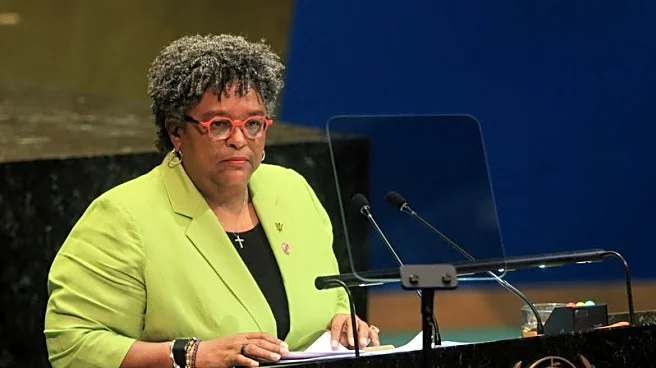
Suzanne Clark, head of the U.S. Chamber of Commerce, addressed the economic outlook for 2026, expressing concerns over rising costs and economic uncertainty. In her 'State of American Business' speech,
Clark emphasized the need for bipartisan efforts to improve the economic landscape, which she described as 'expensive.' She noted the public's weariness with inflation and job security issues, drawing parallels to the economic malaise of the 1970s. Despite these challenges, Clark remains optimistic about America's ability to improve, citing historical growth in GDP and technological advancements. She stressed the importance of economic growth as a solution to current problems and warned against over-regulation.
Why It's Important?
Clark's speech underscores the critical role of economic policy in shaping the future of U.S. business and society. Her call for bipartisan cooperation highlights the need for political unity to address economic challenges effectively. The emphasis on reducing regulation and fostering free enterprise reflects a broader debate on the balance between government intervention and market freedom. For businesses, these discussions are crucial as they navigate regulatory environments and seek growth opportunities. The speech also points to the potential impact of technological advancements, such as AI, on productivity and job security, which are key considerations for policymakers and industry leaders.
What's Next?
The U.S. Chamber of Commerce's focus on economic growth and deregulation suggests potential policy shifts aimed at fostering a more business-friendly environment. This could involve legislative efforts to reduce regulatory burdens and promote innovation. The call for bipartisan action may lead to new collaborations between government and industry to address economic challenges. Businesses and investors will likely monitor these developments closely, as they could influence market conditions and strategic decisions. Additionally, the ongoing dialogue about the role of technology in the economy may lead to initiatives that support workforce adaptation and skill development.