



What's Happening?
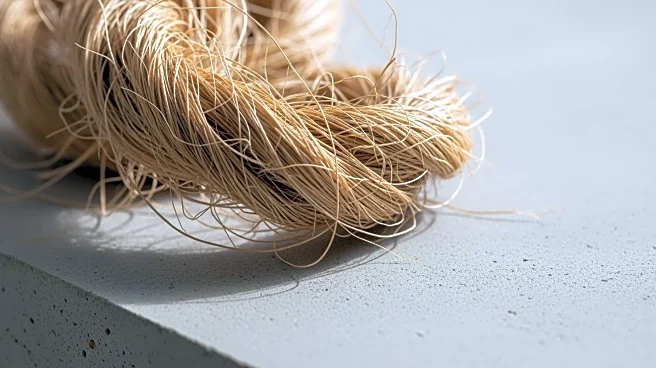
Researchers have discovered that sisal fibers, derived from the Agave sisalana plant, can significantly enhance the durability and sustainability of concrete. A study published in Scientific Reports highlights that sisal fiber-reinforced concrete (SFRC) improves mechanical performance and resistance to environmental degradation. The research focused on using treated sisal fibers to boost concrete's tensile strength and reduce cracking, offering a sustainable alternative to traditional reinforcement materials.
Why It's Important?
The construction industry faces increasing pressure to adopt sustainable practices. Sisal fibers offer a renewable, low-cost alternative to synthetic fibers, reducing the environmental footprint of concrete production. By enhancing concrete's
durability, SFRC can lead to longer-lasting structures, reducing the need for repairs and material waste. This aligns with global sustainability goals and provides an eco-friendly option for infrastructure development, particularly in environmentally sensitive areas.
What's Next?
Further research is needed to optimize the use of sisal fibers in concrete, including exploring hybrid mixes and testing real-world durability. The construction industry may begin to adopt SFRC in various applications, such as pavements and coastal infrastructure, to leverage its environmental and economic benefits. As the demand for sustainable building materials grows, sisal fibers could play a crucial role in the future of construction.