


What's Happening?
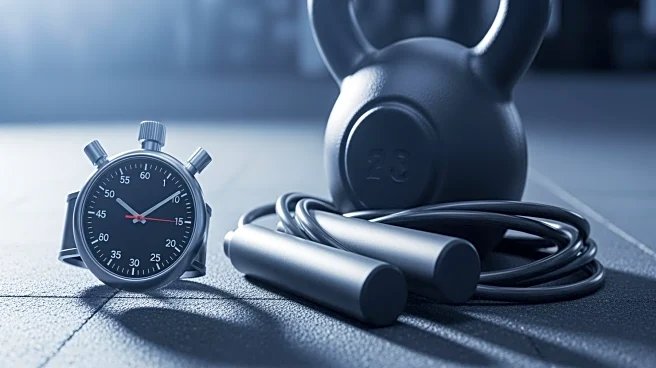
Hyrox, a fitness competition combining running and various exercises, has gained significant popularity among young millennials and Generation Z. The event, which involves a series of one-kilometer runs interspersed with exercises like burpee broad jumps and sled pulls, is attracting participants worldwide. Allana Falconer, a competitor since 2023, has participated in 20 races across six countries, spending up to £2,000 for a single event. The competition's appeal is partly driven by social media and the desire for fashionable fitness gear. Despite the high costs, which can exceed those of marathons, many participants view the expenses as justified due to the event's scale and the specialized equipment required. The competition's format, which allows
for individual or team participation, has a near-equal gender split and is seen as accessible to newcomers despite its intensity.
Why It's Important?
The rise of Hyrox reflects a broader cultural shift in how younger generations prioritize fitness and wellness. For many in their 20s and 30s, exercise is a key part of their identity, with spending on fitness often taking precedence over other expenses. This trend is supported by data from exercise app Strava, which indicates that a significant portion of Gen Z plans to increase their fitness spending. The popularity of Hyrox and similar events highlights a growing market for fitness-related travel and experiences, with some companies offering specialized trips for competitions. This shift could have implications for the fitness industry, travel sector, and consumer spending patterns, as more individuals prioritize health and wellness in their lifestyles.
What's Next?
As Hyrox continues to grow, it is likely to expand its reach, potentially increasing the number of events and locations. This could lead to more opportunities for businesses in the fitness and travel industries to cater to this emerging market. Additionally, the emphasis on competition and personal improvement may drive further innovation in fitness technology and apparel. However, there is also a risk of overtraining and burnout among participants, which could prompt discussions about the balance between fitness and health. Stakeholders in the fitness industry may need to address these concerns to ensure the long-term sustainability of such events.
Beyond the Headlines
The Hyrox phenomenon underscores the evolving nature of fitness culture, where traditional gym workouts are being supplemented by competitive and social elements. This shift may influence how fitness is marketed and perceived, with a focus on community and personal achievement. The high costs associated with participation also raise questions about accessibility and inclusivity in fitness, as not everyone can afford to engage in such activities. As the trend continues, it may prompt a reevaluation of how fitness is integrated into daily life and the role of social media in shaping health behaviors.