


What's Happening?
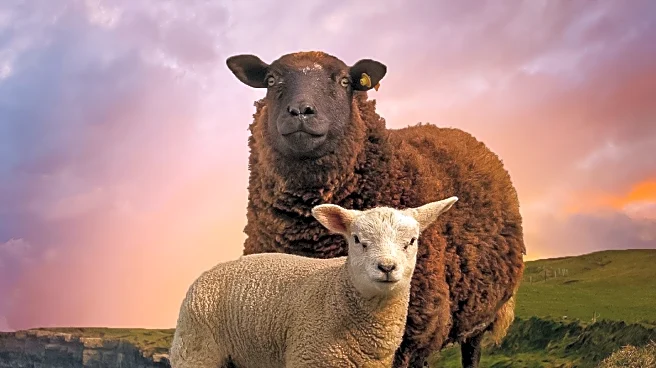
Aubrey Gallegos, once a vegan living in New York City, has transitioned to farming in southeast Washington, where she operates PearlJack Farm. Gallegos, inspired by her work on a documentary about sheep ranchers, decided to explore regenerative agriculture.
She practices intensive rotational grazing and raises grass-fed lamb and pasture-raised poultry, selling directly to consumers. Her farm is named in honor of her great-grandmother and great-uncle, who were cattle ranchers in South Dakota. Gallegos also works as a program manager for the Good Meat Project, a nonprofit focused on ethical meat production, aiming to provide transparency in meat supply chains.
Why It's Important?
Gallegos' shift from veganism to farming highlights a growing interest in regenerative agriculture, which emphasizes sustainable practices and animal welfare. Her approach reflects a broader movement towards transparency in food production, allowing consumers to make informed choices. By selling directly to consumers, Gallegos supports local food systems and contributes to community resilience. Her work with the Good Meat Project further promotes ethical meat production, potentially influencing industry standards and consumer expectations. This development underscores the importance of diverse agricultural practices in addressing food security and environmental sustainability.
What's Next?
Gallegos plans to continue expanding her farm operations while promoting transparency and ethical practices through the Good Meat Project. As consumer demand for sustainable and ethically produced food grows, her farm and similar operations may see increased support. The Good Meat Project's national directory could facilitate connections between consumers and ethical producers, potentially influencing market trends. Gallegos' efforts may inspire other farmers to adopt regenerative practices, contributing to a shift in agricultural norms and policies.
Beyond the Headlines
Gallegos' journey from veganism to farming raises questions about the ethical dimensions of food production and consumption. Her story challenges conventional narratives around veganism and animal agriculture, suggesting that sustainable and humane practices can coexist with meat production. This shift may encourage broader discussions about the role of small farms in sustainable food systems and the importance of consumer education in driving industry change. As more individuals explore regenerative agriculture, cultural perceptions of farming and food production may evolve, fostering a more nuanced understanding of ethical consumption.