





What's Happening?
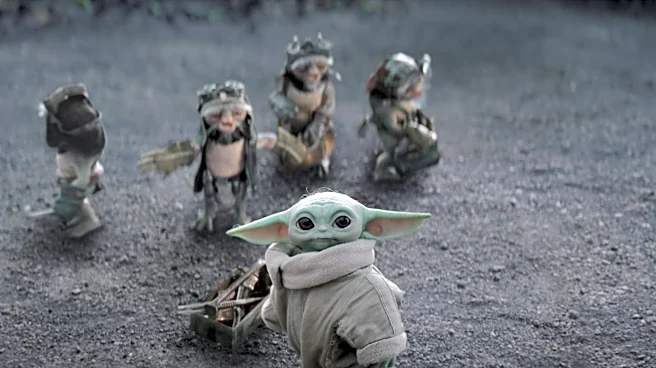
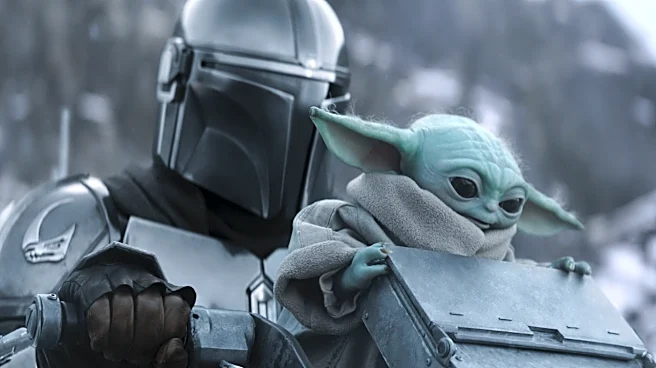
Lucasfilm's latest film, 'The Mandalorian and Grogu,' marks the return of the Star Wars franchise to theaters after a seven-year hiatus since 'The Rise of Skywalker.' The film, which continues the story from the Disney+ series, has been criticized for
its heavy reliance on nostalgia and references to iconic moments from earlier Star Wars films. A notable scene involves a gladiator match inspired by the holographic chess game, dejarik, from 'A New Hope.' Critics argue that the film lacks originality and fails to introduce new, engaging stories, instead opting to evoke past successes. This approach has been seen as a broader issue within the franchise, which has struggled to resonate with younger audiences.
Why It's Important?
The reliance on nostalgia in 'The Mandalorian and Grogu' highlights a significant challenge for Lucasfilm and the Star Wars franchise. As the company seeks to maintain its cultural relevance and financial success, the need to innovate and appeal to new generations becomes crucial. The film's reception could impact future projects and the strategic direction of the franchise. If Lucasfilm continues to prioritize nostalgia over fresh storytelling, it risks alienating potential new fans and diminishing the franchise's long-term viability. This situation underscores the broader industry trend where legacy franchises grapple with balancing homage to their roots with the need for innovation.
What's Next?
Lucasfilm may need to reassess its creative strategy to ensure the Star Wars franchise remains relevant and engaging. This could involve developing new storylines that do not rely heavily on past references and instead focus on character development and original plots. The company might also explore diversifying its content offerings to include more varied narratives that appeal to a broader audience. Stakeholders, including fans and industry analysts, will likely watch closely to see how Lucasfilm responds to the criticism and whether it can successfully pivot to meet the evolving expectations of its audience.
Beyond the Headlines
The film's approach raises questions about the ethical and creative responsibilities of filmmakers in handling beloved franchises. The emphasis on nostalgia can be seen as a safe commercial strategy, but it may also reflect a lack of confidence in new ideas. This trend could influence other franchises and studios, potentially leading to a homogenization of content that prioritizes familiarity over innovation. The cultural impact of such decisions extends beyond box office performance, affecting how stories are told and experienced in contemporary media.