
What's Happening?
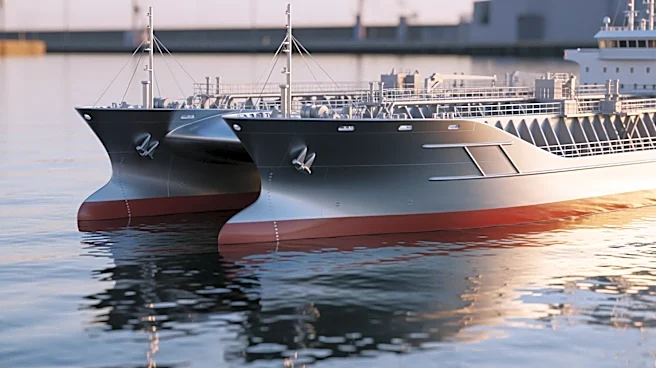
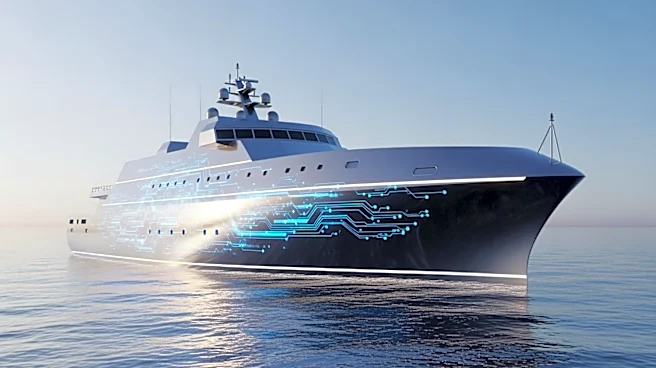
Wah Kwong Maritime Transport, in collaboration with Bureau Veritas Marine & Offshore, has launched the LR2 tanker Frontier Venture, marking the first vessel in a new series of SMART-enabled ships. Built
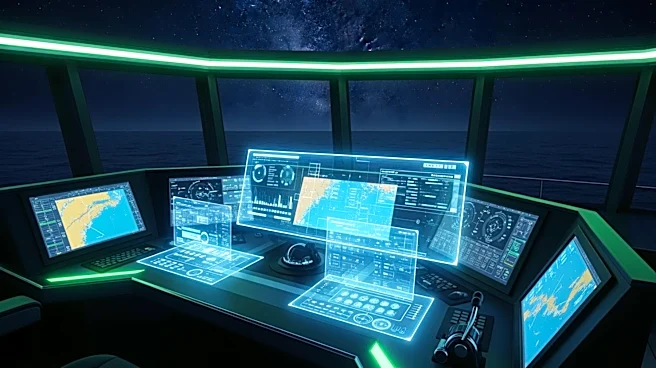
by Hengli Shipyard in Dalian, this ship integrates advanced digital systems for enhanced operational efficiency and safety. The Frontier Venture is equipped with Group 3 'augmented ship' capabilities, which include machinery health monitoring and energy efficiency optimization. This development is part of a broader initiative by Wah Kwong to incorporate digitalization across its fleet, with plans to deliver additional SMART-enabled vessels, including LNG carriers and bulk carriers, by 2027.
Why It's Important?
The introduction of SMART-enabled ships represents a significant advancement in maritime technology, emphasizing the industry's shift towards digitalization and sustainability. By integrating sophisticated monitoring and decision-support systems, these ships promise to enhance operational efficiency and safety, potentially reducing costs and environmental impact. This initiative by Wah Kwong and Bureau Veritas could set a new standard in the maritime industry, encouraging other companies to adopt similar technologies. The move also highlights the importance of collaboration between shipowners, classification societies, and technology providers in advancing maritime operations.
What's Next?
Wah Kwong plans to continue its rollout of SMART-enabled vessels, with the next LR2 tanker expected to be delivered in July 2026. The company aims to expand its fleet with seven SMART-enabled ships by 2027, including LNG carriers and bulk carriers. This ongoing development will likely attract attention from other maritime stakeholders, potentially influencing industry standards and practices. As these technologies prove their value, regulatory bodies may also consider new guidelines to support and govern the use of digital systems in maritime operations.
Beyond the Headlines
The deployment of SMART-enabled ships could have broader implications for the maritime industry, including shifts in workforce requirements and training. As digital systems become more prevalent, there may be a growing demand for personnel skilled in data analysis and digital operations. Additionally, the emphasis on sustainability and efficiency aligns with global efforts to reduce carbon emissions, positioning the maritime sector as a key player in environmental initiatives. This technological evolution may also prompt discussions on data security and privacy, as ships increasingly rely on digital systems for critical operations.