
What's Happening?
Tesla has announced plans to discontinue its Model S and Model X vehicles in the next quarter, shifting production at its Fremont, California plant to Optimus humanoid robots. This decision was disclosed
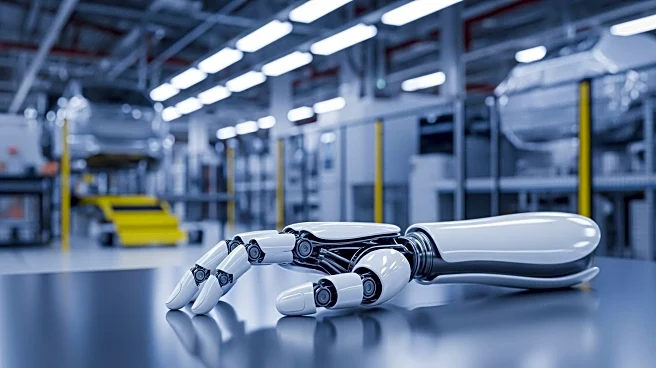
by CEO Elon Musk during Tesla's fourth-quarter and full-year 2025 earnings call. The Model S and X, which have been in production since 2012 and 2015 respectively, will not be replaced by new vehicle models. Instead, Tesla aims to produce one million Optimus robots annually at the Fremont facility. The transition reflects Tesla's broader strategy to focus on autonomous technology and robotics, moving away from traditional vehicle manufacturing.
Why It's Important?
The cessation of Model S and Model X production marks a pivotal shift in Tesla's business strategy, emphasizing the company's commitment to autonomous technology and robotics. This move could reshape the luxury electric vehicle market, where Tesla has been a leader. By reallocating resources to robotics, Tesla is positioning itself at the forefront of technological innovation, potentially setting new industry standards. The decision also highlights the growing importance of AI and robotics in Tesla's future plans, which could influence other automakers to explore similar technological advancements. The impact on Tesla's workforce and supply chain dynamics will be significant as the company transitions to a new production focus.
What's Next?
Tesla's focus will now be on scaling up the production of Optimus robots, with the Fremont plant undergoing retooling to accommodate this shift. The company plans to introduce new autonomous vehicle models, including the Roadster and Cybercab, as part of its future lineup. Tesla's strategy involves leveraging its AI capabilities to expand its product offerings beyond traditional vehicles, potentially leading to new business opportunities and challenges. The transition to robotics and AI will require navigating regulatory landscapes and addressing public concerns about autonomous technology. Tesla's success in this new direction could redefine its role in the tech and automotive industries.