






What's Happening?
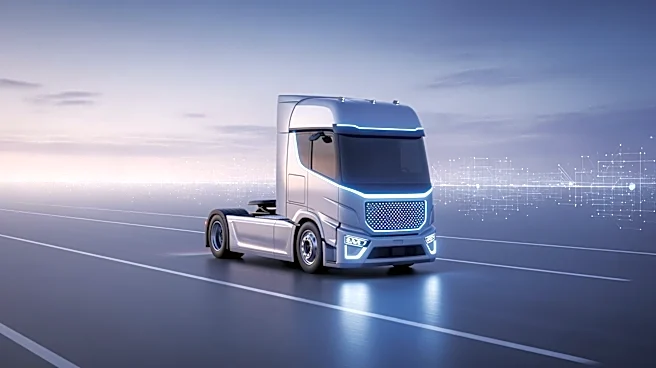
Volvo Autonomous Solutions, a division of Volvo Group, is making significant strides in the deployment of autonomous trucks. The company is integrating autonomous capabilities directly into its truck platforms, moving beyond pilot programs to early-stage
commercial reality. The Volvo VNL Autonomous truck, developed in collaboration with partners like Aurora and Waabi, is being manufactured at Volvo's New River Valley facility in Virginia. This development marks a shift from treating autonomy as an add-on to embedding it within the truck's operational ecosystem. The trucks are currently hauling freight for companies such as DHL and Uber Freight, albeit with safety drivers onboard. The focus is on creating a full ecosystem for autonomous transport, including fleet management and operational processes, to ensure reliability and scalability.
Why It's Important?
The advancement of autonomous trucking by Volvo is crucial as it addresses several challenges faced by the logistics industry, including driver shortages, rising costs, and the need for increased efficiency. By integrating autonomous systems into their trucks, Volvo aims to provide a reliable and scalable solution that can operate 24/7, increasing capacity and operational efficiency. This development could significantly impact the logistics sector by reducing dependency on human drivers and potentially lowering operational costs. The move towards autonomous trucking also aligns with broader industry trends of automation and technological integration, which could lead to safer and more efficient transportation networks.
What's Next?
Volvo's next steps involve scaling the deployment of autonomous trucks from pilot programs to full commercial operations. This will require overcoming technical, regulatory, and operational barriers, including the removal of safety drivers. The company plans to demonstrate the reliability and safety of its autonomous systems to gain regulatory approval and public trust. As the technology matures, Volvo aims to expand its autonomous trucking operations to more routes and customers, ultimately achieving a fully autonomous logistics network. The success of these efforts will depend on continued advancements in technology, regulatory support, and market acceptance.
Beyond the Headlines
The integration of autonomous systems into trucking raises important ethical and legal considerations, such as liability in the event of accidents and the impact on employment for truck drivers. As autonomous trucks become more prevalent, there will be a need for new regulations and standards to ensure safety and accountability. Additionally, the shift towards automation may lead to significant changes in the labor market, requiring retraining and support for displaced workers. The long-term implications of autonomous trucking could also include changes in supply chain dynamics and urban planning, as transportation becomes more efficient and less reliant on human drivers.